
 Save to Pinterest
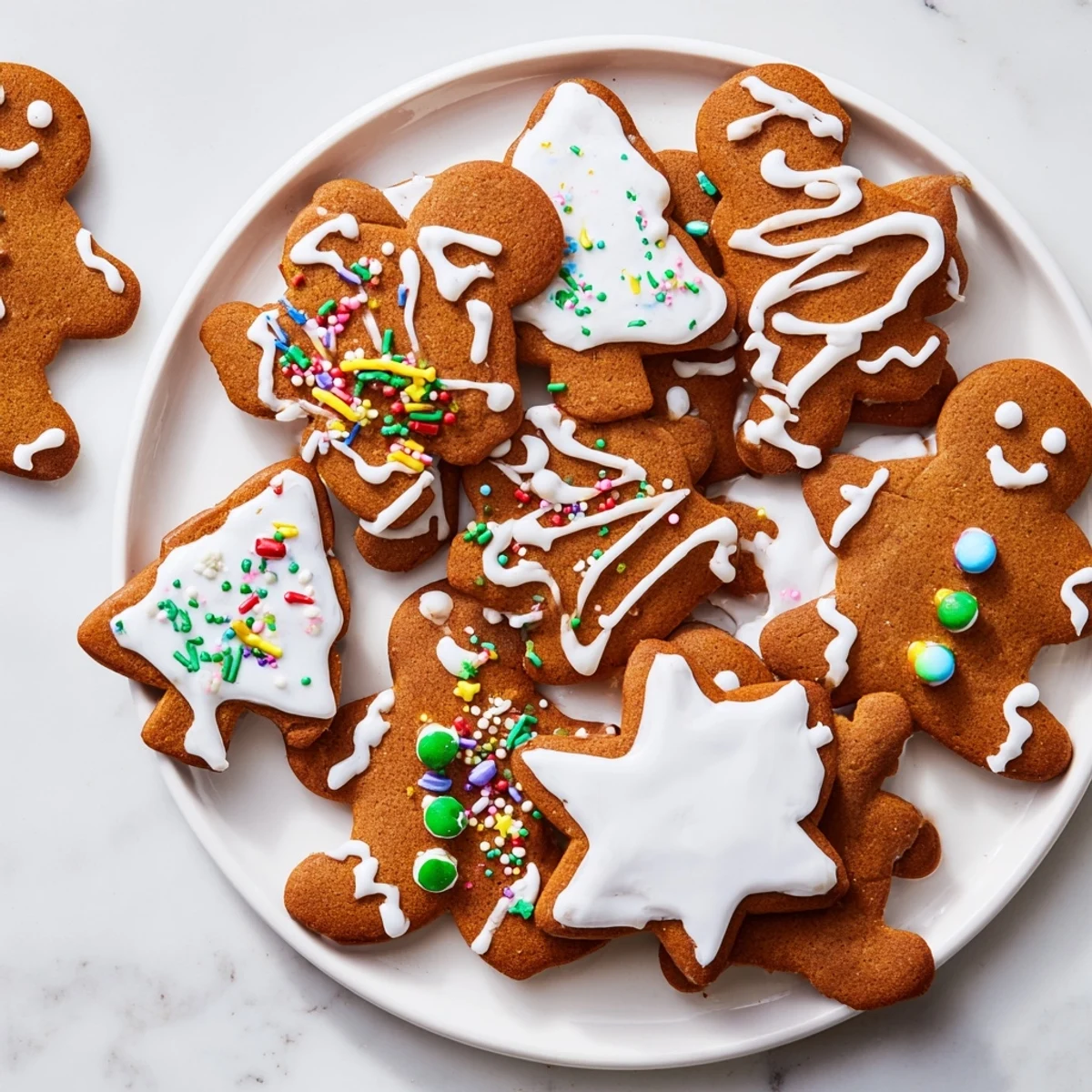
 This classic gingerbread features a blend of warm spices like ginger, cinnamon, and cloves, mixed with molasses and butter to create a rich, flavorful dough. After chilling, the dough is rolled and cut into shapes, then baked until firm around the edges. The cookies are ideal for decorating with royal icing and sprinkles, making them perfect for holiday celebrations and gift-giving. Their texture holds decorations well, and they stay fresh in airtight containers for up to two weeks.
My hands were sticky with molasses the first December I decided to make gingerbread from scratch, standing in my kitchen at six in the morning because I couldn't sleep from holiday excitement. The smell that filled the house—warm spices, dark brown sugar, something almost medicinal from all that ginger—made me feel like I was in someone else's kitchen, someone who actually knew what they were doing. By the time the first batch came out of the oven, my sister had already texted asking what smelled so good, and I realized these cookies were going to become our tradition.
I'll never forget the year my dad tried to sneak a plain cookie before the icing even dried, claiming he needed to 'quality control' the batch, then got royal icing all over his mustache and laughed about it for the rest of the day. That's when I knew I'd made something that mattered—not because it was perfect, but because it brought people together, even if just for a silly moment in the kitchen.
Ingredients
- All-purpose flour (3 cups): This is your structure—it keeps these cookies firm enough to decorate without breaking. Don't sift unless you really want to; a gentle stir is enough.
- Ground ginger (1 tablespoon): This is the star, so use fresh ginger powder if you can find it in the spice aisle; it tastes noticeably brighter than the older stuff sitting at the back of your cabinet.
- Ground cinnamon, cloves, and nutmeg: Toast these together for a few seconds in a dry pan before measuring if you want to wake them up, though it's not necessary.
- Unsalted butter (3/4 cup) and dark brown sugar: The butter needs to be soft enough to press your thumb into easily, and the brown sugar should be packed down so it brings moisture and molasses flavor.
- Unsulphured molasses (1/2 cup): This is non-negotiable—it's the whole flavor profile, deep and complex in a way that regular molasses sometimes isn't.
- Egg and vanilla extract: These bind everything and add subtle richness; don't skip them thinking the cookies will still work.
Instructions
- Whisk the dry ingredients:
- Mix flour, ginger, cinnamon, cloves, nutmeg, baking soda, and salt in a medium bowl, breaking up any clumps of spice with the whisk so they're evenly distributed. Set this aside and breathe in—that's the smell that's about to fill your whole kitchen.
- Cream butter and brown sugar:
- Beat them together for about two minutes until the mixture looks pale and fluffy, almost like frosting. This is how you trap air into the dough, which keeps the cookies tender.
- Add the wet ingredients:
- Pour in the molasses, crack in the egg, add vanilla, and beat until everything is combined and smooth. The dough should look glossy and dark.
- Combine wet and dry:
- Add the flour mixture gradually, stirring by hand or on low speed until a soft dough just comes together. Don't overmix or the cookies will be tough.
- Chill the dough:
- Divide into two discs, wrap tightly in plastic wrap, and refrigerate for at least an hour. Cold dough is much easier to roll and cut without sticking.
- Preheat and prepare:
- Set your oven to 350°F and line your baking sheets with parchment paper while the oven warms up.
- Roll and cut:
- On a lightly floured surface, roll the dough to about 1/4 inch thick and cut into shapes with your favorite cookie cutters. If the dough gets warm and sticky, pop it back in the fridge for five minutes.
- Space and bake:
- Arrange shapes on the prepared sheets about an inch apart—they'll spread just slightly. Bake for 8 to 10 minutes until the edges feel just firm to the touch but the centers are still slightly soft.
- Cool and decorate:
- Let the cookies rest on the baking sheet for five minutes to set slightly, then transfer to a wire rack to cool completely before you even think about royal icing.
 Save to Pinterest
 One December I made three batches and packed them into a box for my college roommate who was homesick, and she texted me that she sat in her dorm room eating them slowly, one at a time, telling her new friends about the traditions they represented. That moment made me understand that these aren't just cookies—they're edible memories, little vessels for kindness.
Royal Icing Basics
Royal icing can seem intimidating, but it's really just powdered sugar, egg white (or meringue powder if you're avoiding raw eggs), and water beaten into submission. The consistency matters: too thick and it won't flow from a piping bag, too thin and it'll drip off the cookie before it dries. Start with less water and add a teaspoon at a time until you hit that sweet spot where it holds a shape but still flows smoothly.
Decorating Like You Mean It
The beauty of decorating these cookies is that there's no such thing as a mistake—colored sugar hides imperfect lines, sprinkles cover uneven icing, and candies turn any wobbly designs into intentional patterns. I've learned that the cookies people love most aren't the ones that look like they came from a professional bakery, they're the ones that look like someone cared enough to try, even if it was messy.
Storage and Gifting
These cookies have staying power, which is why they're beloved by bakers who make them weeks ahead and by friends who receive boxes months later and swear they taste fresh. Keep them in an airtight container with a piece of parchment between layers so the icing doesn't stick, and they'll hold their flavor and structure better than you'd expect.
- If you want to hang these as ornaments, poke a small hole near the top before baking, and thread them with ribbon after the icing dries.
- A box of these cookies says 'I made this for you' louder than almost anything else you could bake.
- Store them away from humidity; the royal icing is sensitive to moisture and can turn sticky if the air is too damp.
 Save to Pinterest
 These gingerbread cookies have taught me that the best recipes are the ones you return to year after year, ones that taste like comfort and smell like home. That's what matters far more than perfection.
Questions & Answers About the Recipe
- → What gives these cookies their warm flavor?
-
A mix of ground ginger, cinnamon, cloves, and nutmeg combines to provide the signature warm spice notes.
- → How should the dough be prepared before baking?
-
The dough should be chilled for at least one hour after mixing to ensure it firms up for easy rolling and cutting.
- → What thickness is ideal when rolling the dough?
-
Roll the dough to about 1/4 inch (6 mm) thick for even baking and sturdy cookies.
- → How long do the cookies bake?
-
Bake for 8–10 minutes at 350°F (175°C) until edges are just firm but the center remains slightly soft.
- → What makes these cookies suitable for decorating?
-
The firm yet tender texture allows royal icing to set well without cracking or smudging.
- → Can the cookies be stored after baking?
-
Yes, store cooled cookies in an airtight container to maintain freshness for up to two weeks.