
 Save to Pinterest
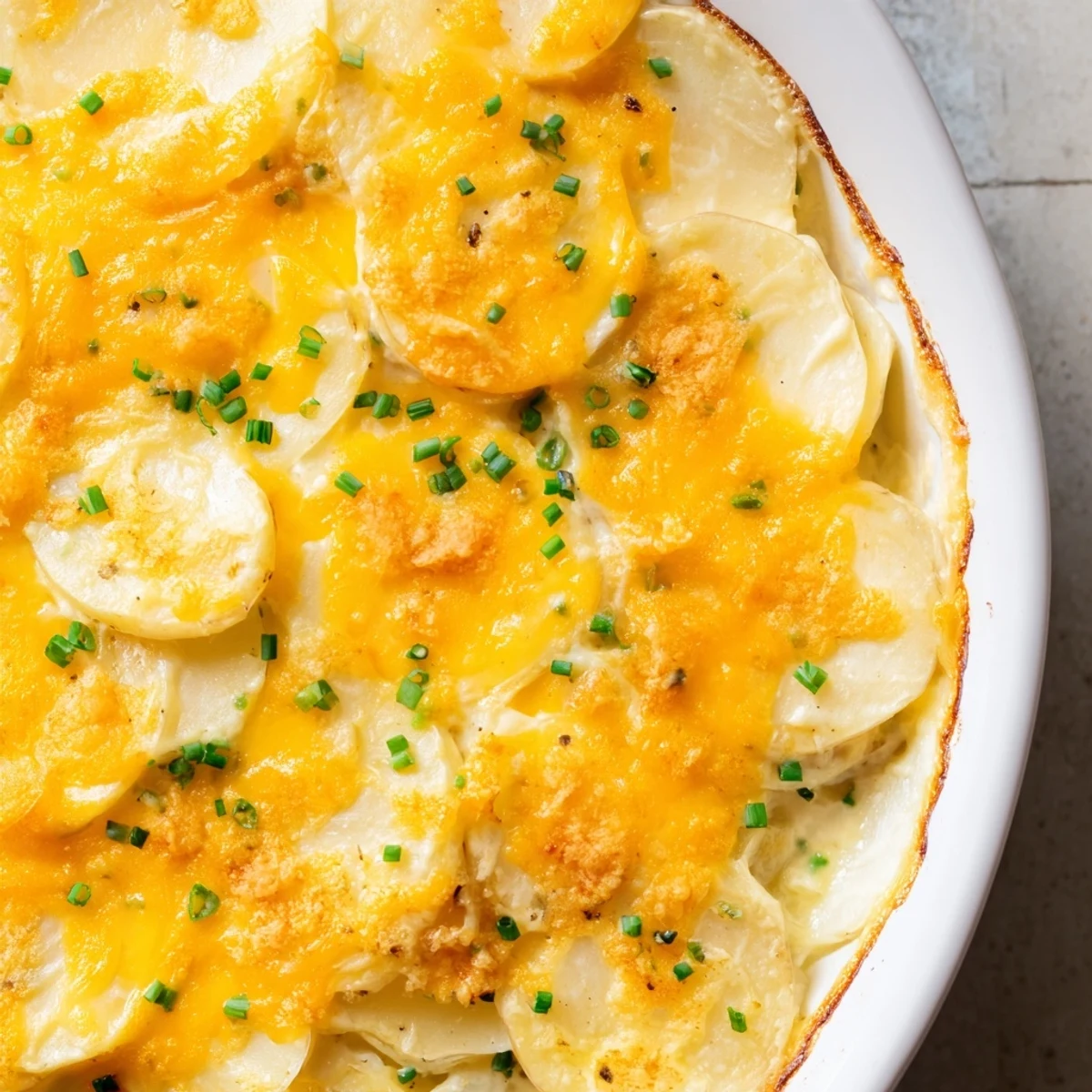
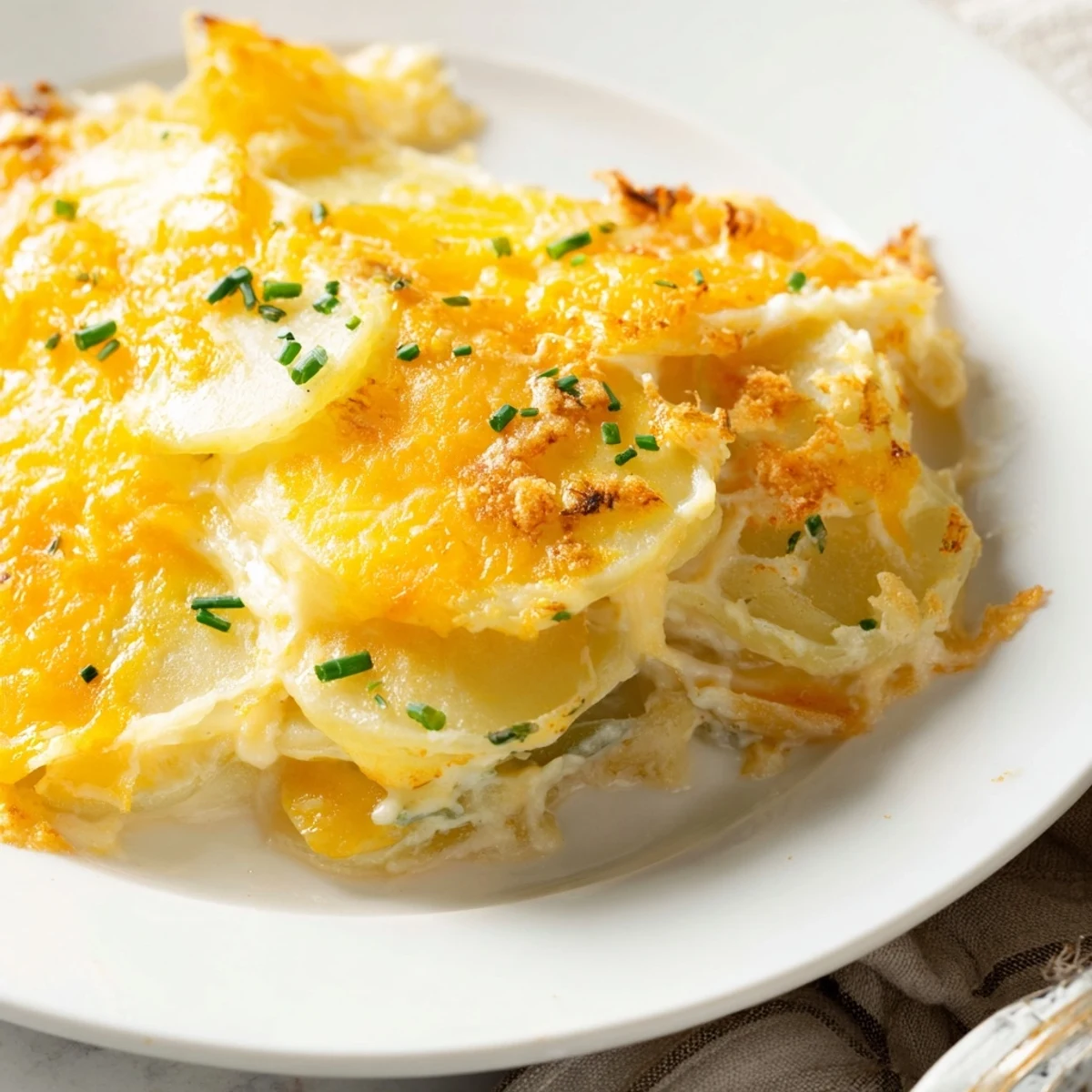
 This creamy baked dish features tender sliced potatoes layered with a rich cheese sauce made from cheddar, milk, and cream. Onions gently soften in butter before the sauce is thickened with flour and seasoned with salt, pepper, garlic powder, and a hint of nutmeg. After layering the potatoes with the flavorful sauce, it is topped with extra cheese and Parmesan, then baked until golden and bubbling. Garnished with fresh chives or parsley, it makes a comforting main dish ideal for family dinners or gatherings.
The preparation includes melting butter and cooking onions, whisking a creamy sauce, and arranging layers carefully before baking. Optional additions like bacon or alternate cheeses can customize the flavor. This dish pairs well with crisp greens or roasted vegetables for a full meal.
There's something about a potato casserole that stops the chatter around a dinner table. My neighbor Margaret brought one to a winter potluck years ago, and I watched people go back for thirds while the salads sat untouched. I finally asked her for the recipe, and when I made it the first time, my kitchen filled with this incredible aroma of cream and cheese that made my teenagers actually want to stick around for dinner. That's when I knew this dish was something special.
I made this for my kid's basketball team potluck, and two of the parents asked me to make it for their family dinners. That's when I realized this isn't just comfort food—it's the kind of dish that makes people feel cared for. One of them told me her picky eater ate seconds, which honestly felt like a small miracle in the moment.
Ingredients
- Russet potatoes: About 1.5 kg peeled and thinly sliced—they hold their shape beautifully while still getting creamy in the oven.
- Yellow onion: One medium onion finely chopped; it melts into the sauce and adds a gentle sweetness.
- Cheddar cheese: Two cups shredded—this is the backbone of the sauce, so don't skimp on quality.
- Whole milk and heavy cream: One cup each; the combination gives you richness without being heavy.
- Unsalted butter: Three tablespoons for making your roux base and keeping the sauce silky.
- All-purpose flour: Two tablespoons to thicken the sauce into something that coats every potato layer.
- Salt, black pepper, and garlic powder: The flavor foundation; taste as you go because cheese adds saltiness too.
- Ground nutmeg: A quarter teaspoon optional, but I always add it—you won't taste it directly, just notice how the whole dish tastes more rounded.
- Parmesan cheese and fresh chives: For topping; they add brightness and texture to cut through the richness.
Instructions
- Set up your stage:
- Preheat your oven to 375°F and grease a 9x13-inch baking dish with butter or cooking spray. Having everything ready means you'll move smoothly through the sauce-making without any scrambling.
- Build the roux:
- Melt three tablespoons of butter in a medium saucepan over medium heat, then add your finely chopped onion. Let it soften for 3 to 4 minutes until it's turning translucent and smells sweet. Stir in two tablespoons of flour and cook for exactly one minute, stirring constantly—this cooks out the raw flour taste.
- Make the sauce silky:
- Slowly whisk in one cup of milk and one cup of heavy cream, stirring constantly to avoid lumps. You'll feel the mixture thicken as it heats up and starts to simmer. Add salt, pepper, garlic powder, and a pinch of nutmeg, then let it bubble gently for 3 to 4 minutes until it coats the back of a spoon.
- Add the cheese:
- Remove the pan from heat and stir in 1.5 cups of shredded cheddar cheese until it's completely melted and the sauce is smooth and glossy. This moment is where everything comes together with flavor.
- Layer thoughtfully:
- Arrange half of your thinly sliced potatoes in an even layer across the bottom of your prepared baking dish, then pour half of the cheese sauce over them. Add your remaining potatoes in another layer, then top with the rest of the sauce. The potatoes should be mostly submerged or they'll dry out on top.
- Top and bake covered:
- Sprinkle the remaining half cup of cheddar and your Parmesan cheese over the top, cover everything with foil, and bake for 40 minutes. The foil traps steam and keeps the potatoes tender without the top browning too fast.
- Finish with golden edges:
- Remove the foil and bake for another 20 minutes until the top is golden and the whole thing is bubbling around the edges. Let it rest for 10 minutes—this lets the layers set slightly so they don't fall apart when you scoop. Finish with fresh chives or parsley for a pop of color and freshness.
 Save to Pinterest
 I watched my mother-in-law try this dish at a family gathering, and she got genuinely quiet while eating it—not many things stop her from talking. Afterward she said it reminded her of her grandmother's kitchen, which is maybe the highest compliment a casserole can get.
Making It Your Own
This casserole is actually a blank canvas if you want it to be. I've added crispy bacon between the layers on mornings when I had some left over, and I've swapped in Gruyère cheese when I wanted something earthier and more complex. One time I mixed in some sharp white cheddar with the regular cheddar, and it gave everything an unexpected tang that people kept trying to identify. The beauty is it holds whatever direction you push it in.
Timing and Make-Ahead Magic
You can assemble this entirely the night before, cover it, and stick it in the refrigerator—just add 10 to 15 minutes to your baking time if it goes straight from cold to oven. This is genuinely useful when you're cooking for a crowd and don't want to spend the afternoon in the kitchen. I've also found that leftovers are somehow better the next day; the flavors settle and deepen in a way that feels almost intentional.
Serving and Pairing
This casserole doesn't need anything fancy beside it, just something bright to cut through the richness. A crisp green salad with sharp vinaigrette does the job perfectly, or roasted vegetables if you want to stay warm and cozy. I've served it with everything from roasted Brussels sprouts to a simple arugula salad, and it's never felt out of place.
- Let it cool for five minutes after you pull it from the oven so it holds together when you scoop.
- Save any leftovers in an airtight container; they reheat beautifully in a low oven or even a microwave.
- If your top isn't golden enough when the potatoes are tender, crank the broiler for the last 2 to 3 minutes and watch it closely.
 Save to Pinterest
 This is the kind of dish that becomes part of your regular rotation without you planning for it. It's reliable and humble and somehow makes people feel like they're at the table with someone who actually cares.
Questions & Answers About the Recipe
- → How do I prepare the cheese sauce for the dish?
-
Melt butter and cook finely chopped onions until soft. Stir in flour and cook briefly, then whisk in milk and cream. Bring to a simmer, add spices, and cook until thickened. Finally, stir in shredded cheddar cheese until smooth.
- → What is the best type of potato to use?
-
Russet potatoes are ideal for this dish due to their starchy texture, which helps create tender, fluffy layers when baked.
- → Can I make this ahead of time?
-
Yes, assemble the layers in the baking dish and refrigerate before baking. Bake straight from the fridge, adding a few extra minutes to the cooking time if needed.
- → What are some good variations for richer flavor?
-
Adding cooked bacon or ham between the layers can enhance the dish. Swapping cheddar for Gruyère or Swiss cheese also offers a different, richer taste.
- → How should leftovers be stored?
-
Cool completely and store leftovers in an airtight container in the refrigerator for up to 3 days. Reheat gently in the oven to maintain texture.