
 Save to Pinterest
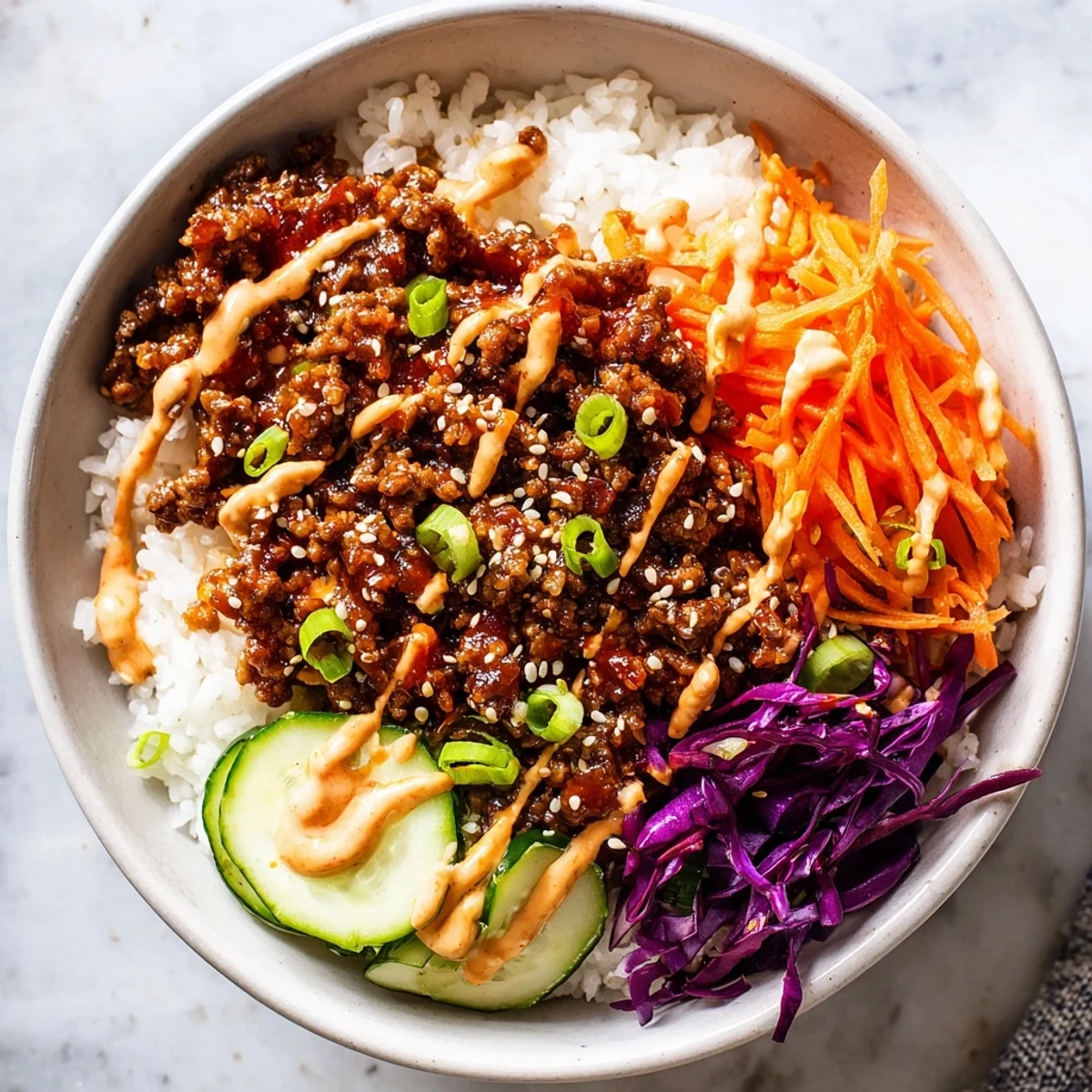
 This vibrant bowl brings together tender Korean-seasoned ground beef with crisp fresh vegetables and fluffy rice, all topped with a creamy spicy mayo drizzle. The beef gets its rich flavor from a blend of soy sauce, brown sugar, garlic, ginger, and gochujang paste, creating a perfect balance of sweet and savory notes. Ready in just 30 minutes, this satisfying meal delivers restaurant-quality Korean fusion cuisine right at your table. The spicy mayo adds a cool, creamy contrast to the warm, caramelized beef, while shredded carrots, cucumber, and red cabbage provide refreshing crunch in every bite.
The steam was still rising from the rice cooker when my roommate walked in and announced she'd never understand my obsession with bowl meals. That night, I piled everything high—beef with that glossy red glaze, crisp vegetables catching the light, and a generous drizzle of spicy mayo spiraling on top. One bite in and she was already asking for the recipe, completely sold on how something so simple could taste this complex.
During exam week in college, my friend Sarah and I made massive batches of this Korean beef and ate it for three days straight out of mismatched Tupperware containers while studying at the kitchen table. We'd take breaks just to debate whether adding more gochujang was worth the extra heat, usually ending up with red faces and empty bowls. Now whenever I make it, I think of those late nights and how food can turn stress into something almost sacred.
Ingredients
- 1 lb (450 g) lean ground beef: Ground beef has just enough fat to keep things juicy while still letting the flavors shine through—90/10 blend works perfectly here
- 2 tablespoons soy sauce: This creates that savory base note, and honestly, low-sodium gives you more control over the final salt level
- 1 tablespoon brown sugar: The molasses notes in brown sugar caramelize beautifully and balance the salty elements
- 2 teaspoons sesame oil: Toasted sesame oil adds this incredible nutty aroma that you just cannot replicate with anything else
- 2 cloves garlic, minced: Fresh garlic matters here—jarred stuff just does not have the same punch when cooked quickly
- 1 teaspoon fresh ginger, grated: I learned the hard way that fresh ginger makes or breaks the authentic taste—ground ginger is too subtle
- 1 tablespoon gochujang or sriracha: Gochujang gives you that fermented depth, but sriracha works if that is what you have in the fridge
- 1/2 teaspoon black pepper: Adds just enough background heat to complement the gochujang without overwhelming
- 1/3 cup mayonnaise: Real mayo makes the creamiest sauce—Greek yogurt works but the texture is noticeably different
- 1 tablespoon sriracha: Adjust this based on your spice tolerance—start with less and add more if you are brave
- 1 teaspoon rice vinegar: This tiny amount cuts through the rich mayo and brightens the whole sauce
- 1 teaspoon honey: Even if you usually skip sugar in recipes, this rounds out the heat and makes everything cohesive
- 4 cups cooked white rice: Day-old rice actually works great here, but fresh rice is just fine if you let it steam uncovered for a few minutes
- 1 cup shredded carrots: These add sweetness and crunch that plays perfectly against the rich beef
- 1 cup cucumber, thinly sliced: English cucumbers stay crisp longer and do not have those tough seeds
- 1/2 cup red cabbage, shredded: The purple color makes the bowl look stunning and it holds up beautifully in the fridge
- 2 green onions, sliced: Both white and green parts work—white for more bite, green for fresh onion flavor
- 1 tablespoon toasted sesame seeds: Toasting them yourself in a dry pan for two minutes makes such a difference in flavor
Instructions
- Get your rice ready:
- Start the rice first so everything else comes together while it cooks—having it warm and ready makes assembly feel effortless
- Whisk together the spicy mayo:
- Mix mayo, sriracha, rice vinegar, and honey until completely smooth, then let it sit at room temperature to meld the flavors while you cook the beef
- Brown the beef:
- Heat sesame oil in a large skillet over medium-high heat until it shimmers slightly, then add ground beef and break it apart with a wooden spoon, letting it develop a nice crust before fully cooking through
- Add the aromatics:
- Stir in minced garlic and grated ginger, cooking for just one minute until the smell fills your kitchen—any longer and the garlic might turn bitter
- Create the glaze:
- Pour in soy sauce, brown sugar, gochujang, and black pepper, stirring constantly until the sauce bubbles, thickens slightly, and coats every crumb of beef
- Build your bowls:
- Divide warm rice among four bowls, arrange the beef on one side, then fan out carrots, cucumber, and cabbage like you are plating at a restaurant
- Finish with flair:
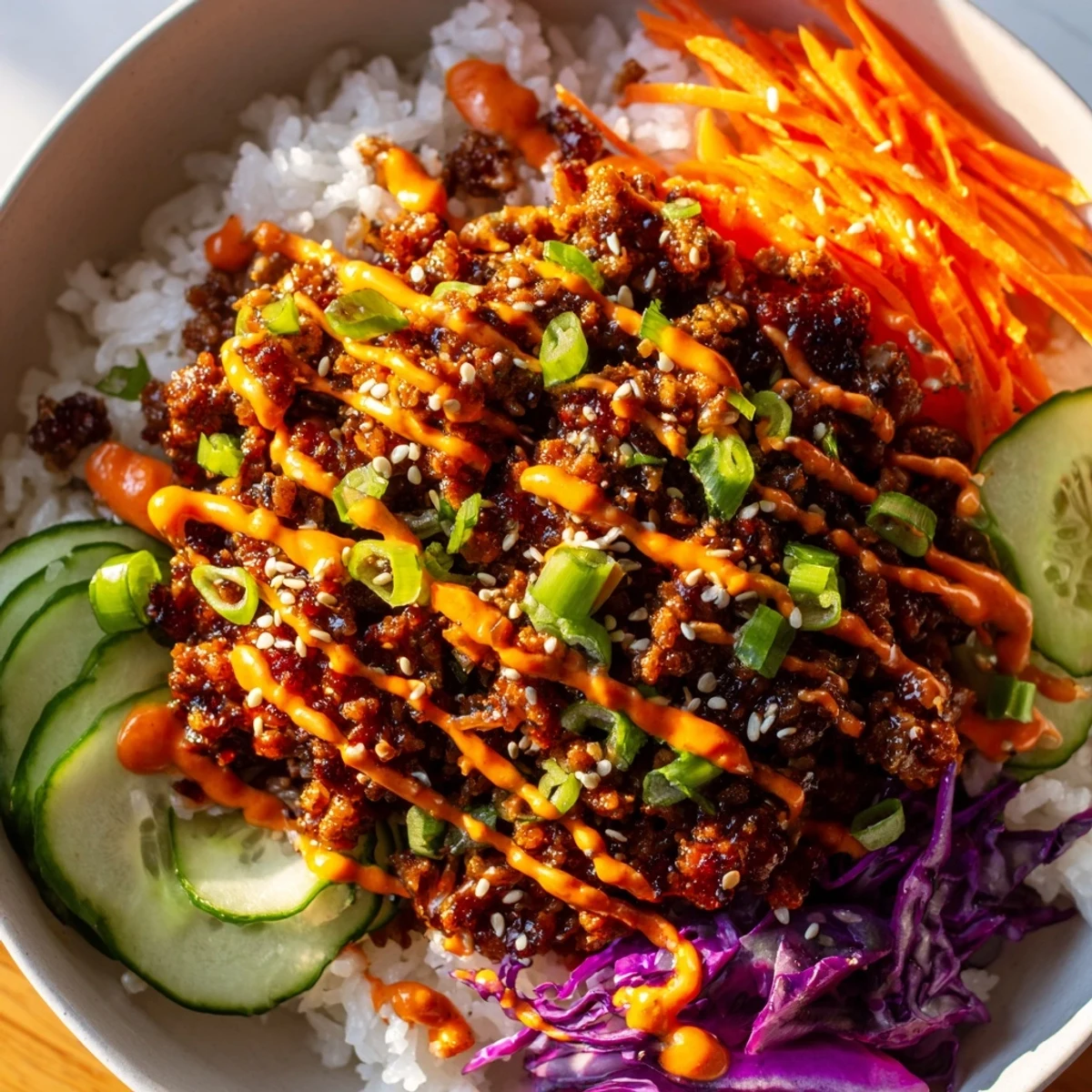
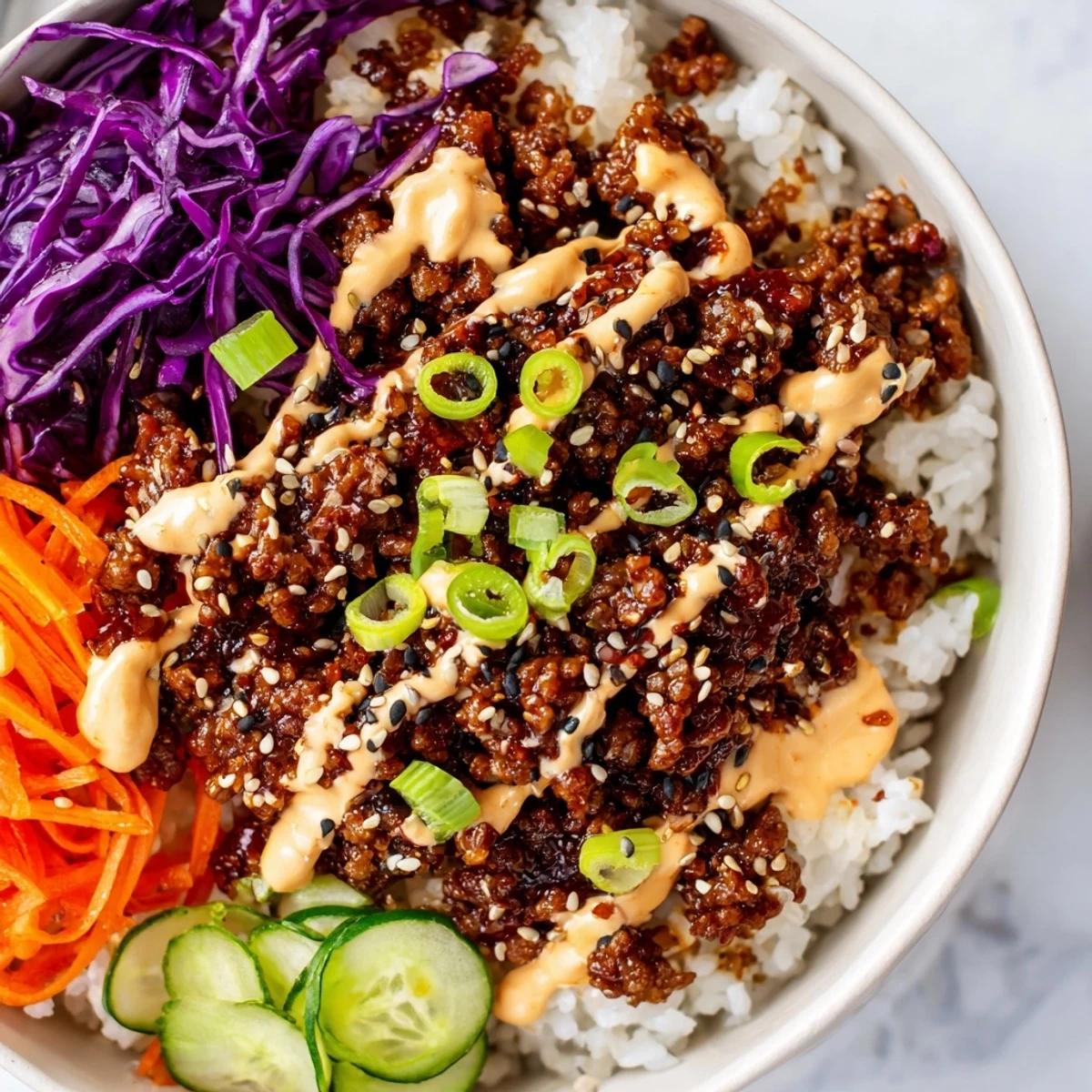
- Drizzle spicy mayo in a zigzag pattern, scatter green onions and sesame seeds on top, and serve immediately while everything is still warm and the sauce is glossy
 Save to Pinterest
 Last summer, I made this for a potluck and watched the youngest kid there—usually a chicken nuggets purist—tentatively try a bite after his mom dared him. He went back for thirds and later asked if I could teach him how to make it, proving that sometimes the most unlikely people end up loving bold flavors when they are presented in such an approachable way.
Making It Your Own
The beauty of this bowl lies in how adaptable it is—I have swapped ground beef for crumbled tofu, turkey, and even leftover shredded pork. Do not be afraid to adjust the heat level or add whatever vegetables are in season, because the core flavors are strong enough to support plenty of variations.
Perfecting the Beef
The secret is letting the beef get a little crispy in places before adding the sauce—those caramelized bits create such incredible texture and flavor. Once you add the liquid ingredients, keep the heat high enough that the sauce bubbles and reduces rather than just simmering.
Meal Prep Mastery
This recipe was basically made for meal prep—everything holds up beautifully for days and actually tastes better after the flavors meld. Store the beef, rice, and vegetables separately, and keep the spicy mayo in its own small container.
- Reheat the beef with a splash of water to refresh the sauce
- Cucumbers stay crisp if you store them with a paper towel to absorb excess moisture
- The spicy mayo lasts up to two weeks in the fridge, so double the batch and use it on everything from burgers to roasted vegetables
 Save to Pinterest
 There is something deeply satisfying about a meal that comes together this quickly yet tastes like you spent hours balancing flavors. Hope this becomes one of those recipes you turn to again and again.
Questions & Answers About the Recipe
- → Can I make this dish gluten-free?
-
Yes, simply substitute tamari for soy sauce and verify your gochujang is certified gluten-free. Most other ingredients naturally fit a gluten-free diet.
- → What protein alternatives work well?
-
Ground turkey or chicken make excellent lighter options. For a vegetarian version, use crumbled tofu or plant-based ground meat substitutes seasoned the same way.
- → How spicy is this bowl?
-
The heat level is moderately spicy and customizable. Reduce the sriracha in the mayo and use less gochujang for milder flavor, or increase both for extra kick.
- → Can I prepare components ahead?
-
The spicy mayo can be made 2-3 days in advance and stored refrigerated. The vegetables can be prepped a day ahead. Cook the beef fresh for best texture and flavor.
- → What other toppings can I add?
-
Fried eggs, kimchi, pickled radishes, avocado slices, or edamame make excellent additions. Sesame seeds and extra green onions enhance the presentation.
- → Is this dish served hot or cold?
-
The beef and rice should be served hot, while the vegetables provide a cool, crisp contrast. The spicy mayo can be drizzled on either warm or at room temperature.