
 Save to Pinterest
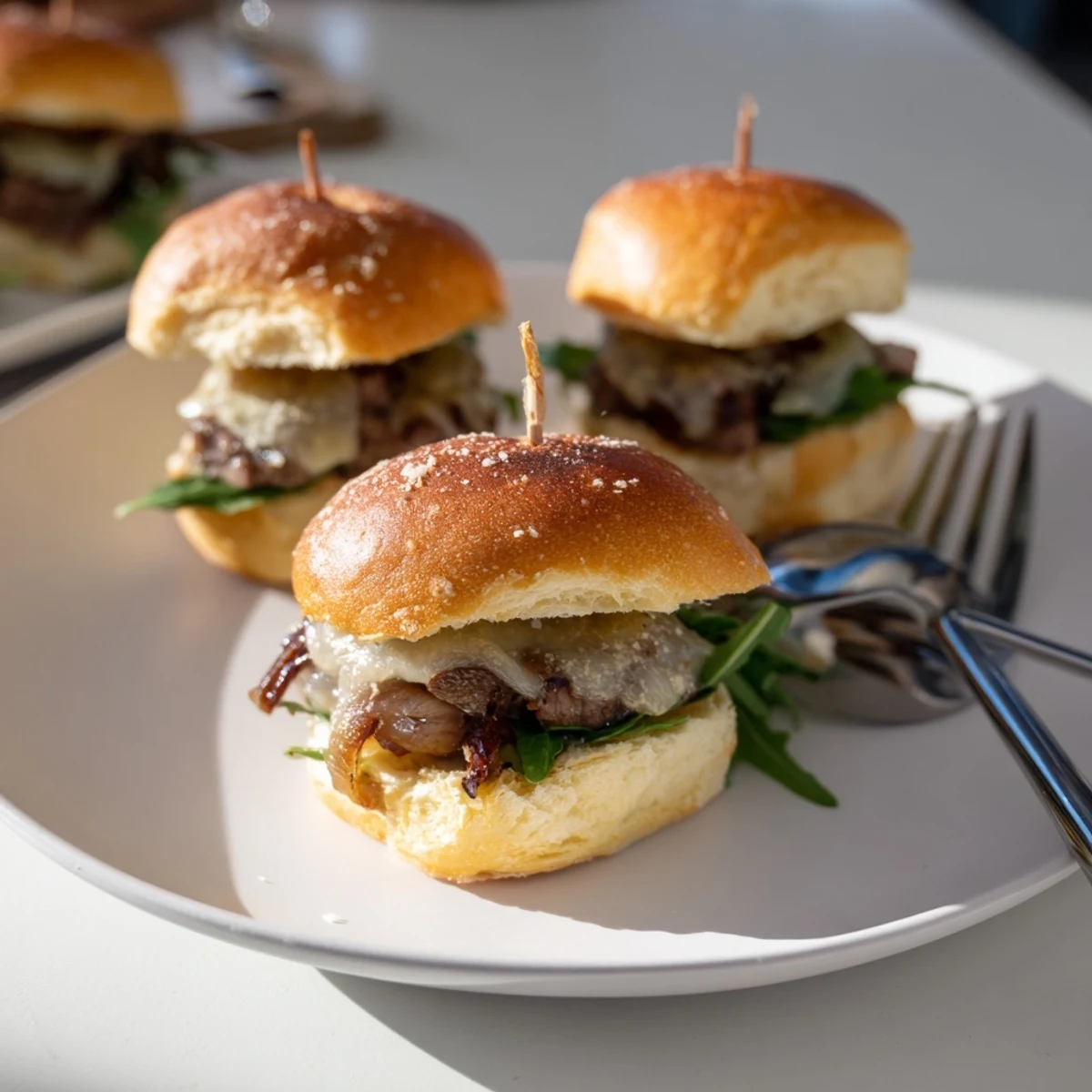
 These filet mignon sliders elevate casual handheld dining into something truly special. Tender, seared filet mignon medallions are nestled inside warm, homemade garlic parmesan rolls brushed with a savory garlic butter spread.
Topped with peppery arugula, melted provolone or Swiss cheese, and sweet caramelized onions, each slider delivers a perfect balance of flavors and textures. Ready in about an hour, they're ideal for dinner parties, game day spreads, or any occasion that calls for something memorable.
The exhaust fan above my stove gave out the night I decided these sliders would be the star of my husbands birthday dinner. Smoke billowed, the fire alarm screamed its opinion, and I stood there laughing with a dish towel waving at the ceiling while filet mignon seared in the skillet below. Somehow, between the chaos and the noise, those little medallions came out perfectly medium rare with a crust that could make a steakhouse chef nod in approval. The garlic parmesan rolls were still warm from the oven, and I knew right then this disaster of an evening had produced something extraordinary.
My friend Rachel took one bite at our backyard gathering last summer and immediately demanded the recipe while grease dripped down her chin. She tried to play it cool, saying she would maybe make them sometime, but three days later she texted me a photo of her own batch with the caption hooked.
Ingredients
- All purpose flour (2 cups): The foundation of the rolls, and bread flour works too if you want a slightly chewier texture.
- Active dry yeast (1 packet): Check the expiration date because dead yeast has ruined more weekend baking projects than I care to admit.
- Warm milk (three quarter cup): Should feel like a warm bath, around 110 degrees Fahrenheit, since anything hotter kills the yeast instantly.
- Granulated sugar (2 tbsp): Feeds the yeast and adds just enough sweetness to balance the savory garlic and cheese.
- Salt (1 tsp): Do not skip this or the rolls will taste flat no matter how much parmesan you pile on.
- Unsalted butter, softened (3 tbsp for dough): Room temperature butter incorporates smoothly into the dough without leaving greasy pockets.
- Grated parmesan cheese (half cup): Freshly grated melts into the dough beautifully, while the pre shredded kind tends to clump up.
- Garlic cloves, minced (3 for dough): Fresh garlic makes a noticeable difference compared to the jarred version here.
- Egg (1, for wash): Creates that deep golden sheen on top of the rolls that makes people think you bought them from a bakery.
- Filet mignon (1 and a half lbs, cut into 8 medallions): Ask your butcher to cut them evenly so they all cook at the same rate in the pan.
- Olive oil (1 tbsp): Has a higher smoke point than butter, giving you that hard sear without burning.
- Salt and black pepper: Be generous with the pepper because it creates a beautiful crust on the meat.
- Butter for the pan (1 tbsp): Added at the very end to baste the medallions and infuse them with rich flavor.
- Unsalted butter, softened (3 tbsp for spread): This is the garlic butter spread component, so make sure it is soft enough to mix easily.
- Garlic clove, minced (1 for spread): One clove is enough here since the rolls already carry strong garlic flavor.
- Chopped fresh parsley (1 tbsp): Adds a bright, fresh note that cuts through all the richness of the butter and cheese.
- Arugula leaves (1 cup, optional): The peppery bite complements the richness of the beef better than lettuce ever could.
- Caramelized onions (half cup, optional): Worth the extra twenty minutes of slow cooking in a pan because they add a sweetness nothing else can replicate.
- Provolone or Swiss cheese (8 slices, optional): Provolone melts beautifully while Swiss adds a nutty tang that pairs surprisingly well with filet.
Instructions
- Wake up the yeast:
- Pour warm milk into a bowl, stir in the sugar and yeast, and wait five minutes until the surface gets bubbly and frothy. If nothing happens, your yeast is dead and you need to start over with a fresh packet.
- Build the dough:
- Combine flour, salt, softened butter, parmesan, and minced garlic in a large bowl, then pour in the yeast mixture and stir until a shaggy dough forms. Turn it out onto a floured surface and knead for about eight minutes until the dough feels smooth and springs back when you poke it gently.
- Let it rise:
- Cover the bowl with a damp towel or plastic wrap and set it somewhere warm for about an hour until the dough has roughly doubled in size. I usually tuck mine into the oven with just the light turned on during winter months.
- Shape and bake the rolls:
- Divide the dough into eight even balls, arrange them on a parchment lined baking sheet with space between each one, and brush generously with beaten egg. Sprinkle extra parmesan on top if you want a more pronounced cheese flavor, then bake at 375 degrees Fahrenheit for eighteen to twenty minutes until deeply golden.
- Sear the filet mignon:
- Season the medallions liberally with salt and pepper on both sides while the olive oil heats in a skillet over medium high until it shimmers. Lay the medallions in the pan and do not move them for two to three minutes per side, then drop in the tablespoon of butter during the last minute and spoon it over the meat repeatedly.
- Rest the meat:
- Transfer the medallions to a plate and let them sit undisturbed for five minutes so the juices redistribute instead of running out onto your cutting board.
- Whip the garlic butter:
- Stir together softened butter, minced garlic, parsley, and a pinch of salt in a small bowl until everything is evenly combined and spreadable.
- Build the sliders:
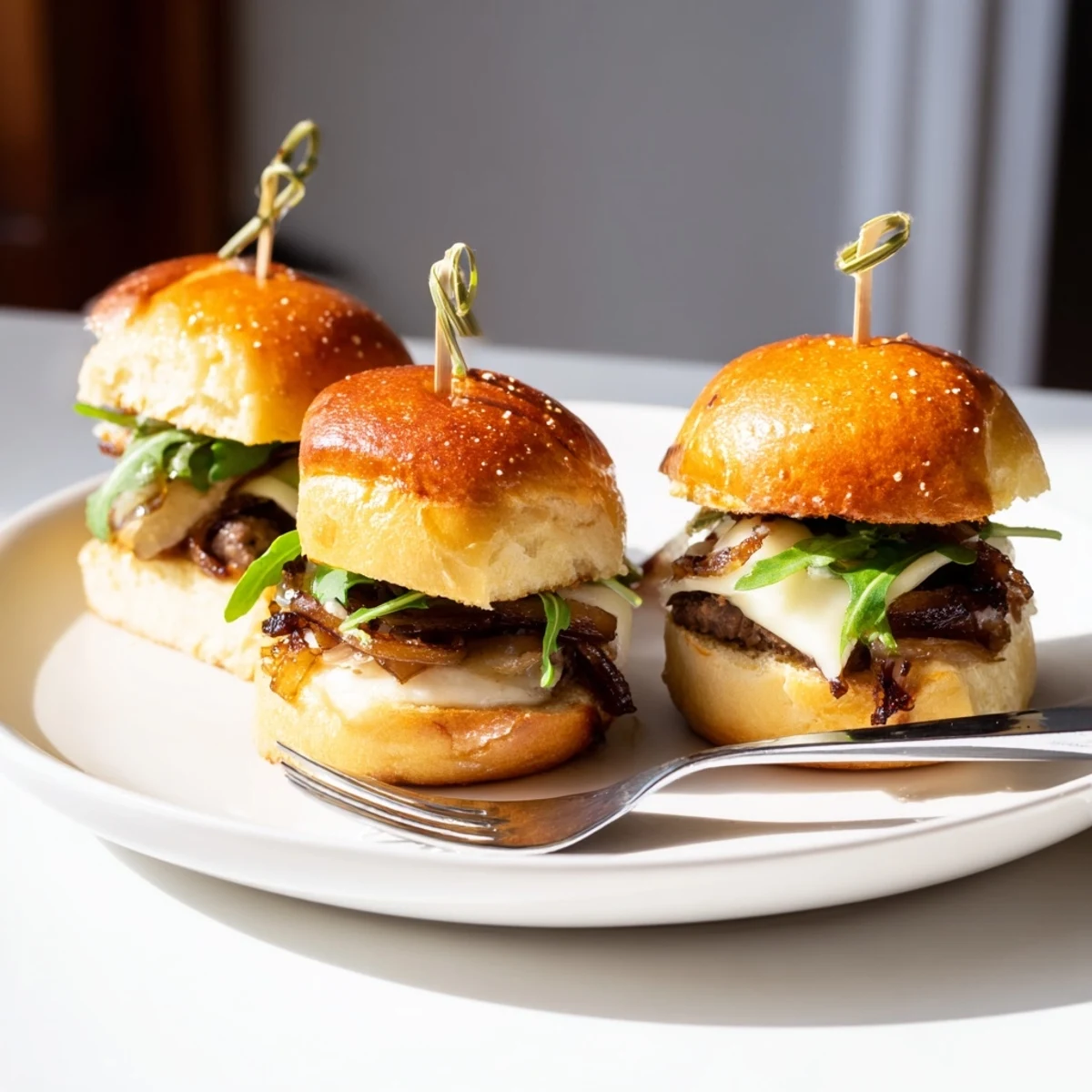
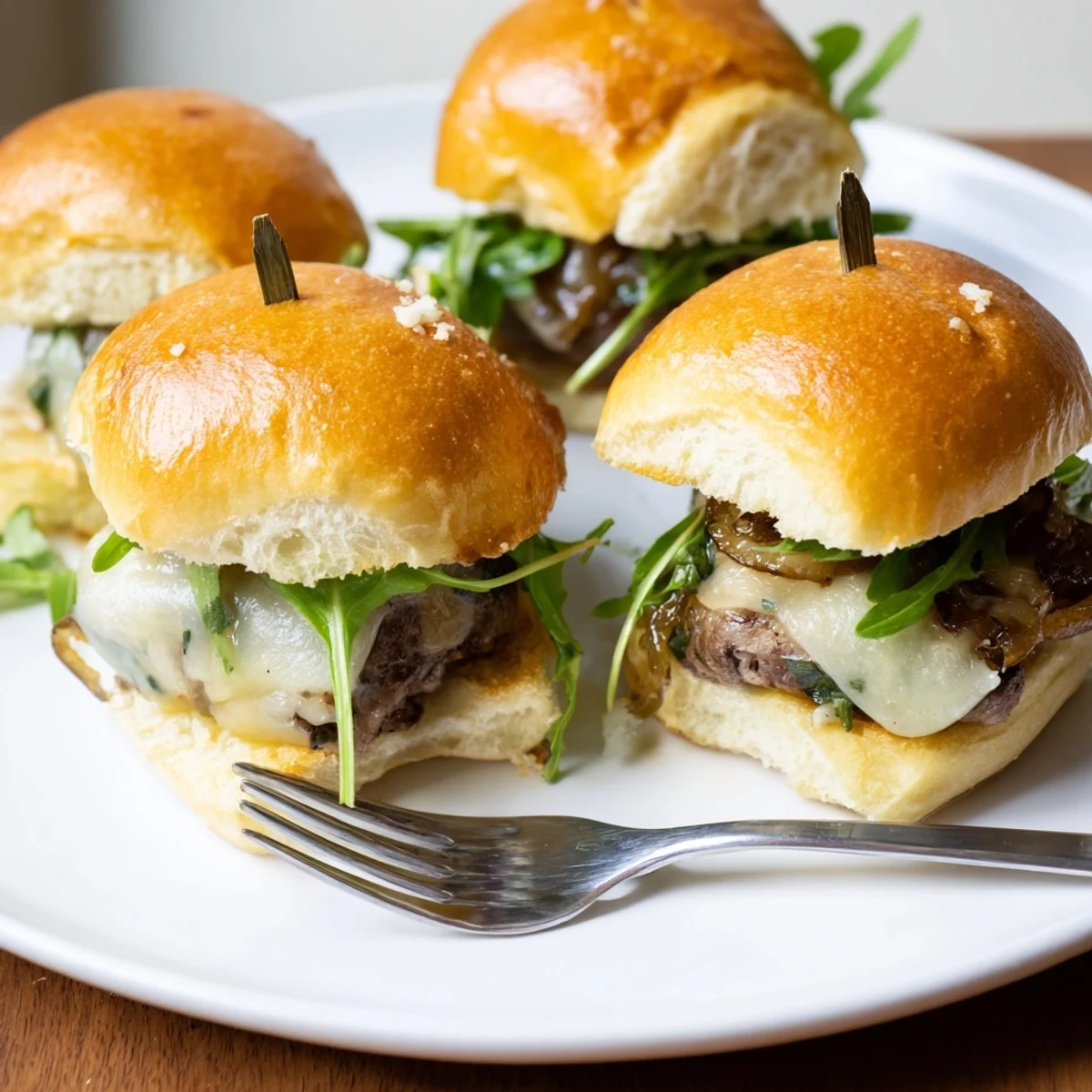
- Slice each roll in half, spread garlic butter generously on both sides, then layer arugula, a filet medallion, a slice of cheese, and a spoonful of caramelized onions before capping it with the top half of the roll. Serve them while everything is still warm because that first bite is pure magic.
 Save to Pinterest
 There is something deeply satisfying about watching someone pick up a slider with both hands, take a bite, and immediately close their eyes. That brief silence before the compliments start pouring in is the real reward for the hour you spent in the kitchen.
Picking the Right Filet
Not all filet mignon is created equal, and I learned this the hard way after buying a pre packaged cut from the grocery store that cooked up tough and stringy. Talk to your butcher, ask for center cut pieces, and look for meat with fine marbling throughout rather than large pockets of fat. The medallions should be roughly two inches thick so they sear on the outside while staying pink and tender within.
Getting the Rolls Just Right
The dough should feel slightly tacky but not stick to your hands after kneading. If it is too wet, add flour one tablespoon at a time, and if it is too dry, a tiny splash of milk brings it back. I once over floured the surface and ended up with rolls that could double as doorstops, so less is genuinely more when it comes to the kneading surface.
Serving and Pairing Ideas
These sliders are rich enough to stand alone, but a simple side of roasted potatoes or a crisp green salad balances the plate beautifully. A glass of Pinot Noir or a cold beer cuts through the richness in exactly the right way.
- Toast the buttered rolls cut side down in the skillet for thirty seconds before assembling for an extra layer of crunch.
- Swap arugula for baby spinach in winter when greens need to be heartier and less peppery.
- Serve within ten minutes of assembling because the magic fades quickly once everything cools down.
 Save to Pinterest
 Some recipes are just dinner, but these sliders have a way of turning an ordinary evening into something people remember and ask about months later. That alone makes the hour of effort completely worthwhile.
Questions & Answers About the Recipe
- → How should I cook the filet mignon for the sliders?
-
Season the medallions with salt and pepper, then sear them in a hot skillet with olive oil for 2-3 minutes per side. Add a tablespoon of butter during the last minute for richness. For the best results, aim for medium-rare doneness and let the meat rest for 5 minutes before assembling.
- → Can I make the garlic parmesan rolls ahead of time?
-
Yes, you can bake the rolls a day in advance and store them in an airtight container at room temperature. Reheat them briefly in the oven at 350°F for about 5 minutes before assembling your sliders to restore warmth and softness.
- → What cheese pairs best with these sliders?
-
Provolone and Swiss cheese both work beautifully. Provolone adds a mild, creamy melt that complements the beef, while Swiss brings a slightly nutty flavor. Choose based on your preference—either will melt nicely over the warm filet medallions.
- → What toppings go well with filet mignon sliders?
-
Arugula adds a peppery bite that balances the richness of the beef and butter. Caramelized onions bring sweetness and depth. You can also add tomato slices for freshness or swap arugula for baby spinach if you prefer a milder green.
- → Can I substitute the filet mignon with another cut of beef?
-
While filet mignon provides the most tender result, you can use sirloin or ribeye cut into small portions. Keep in mind that the cooking time may vary slightly depending on the thickness and fat content of the cut you choose.
- → How do I store and reheat leftover sliders?
-
Store assembled sliders in the refrigerator wrapped tightly in foil for up to 2 days. Reheat in a 325°F oven for about 10 minutes to warm through without overcooking the beef. The rolls and filling are best stored separately if possible.