
 Save to Pinterest
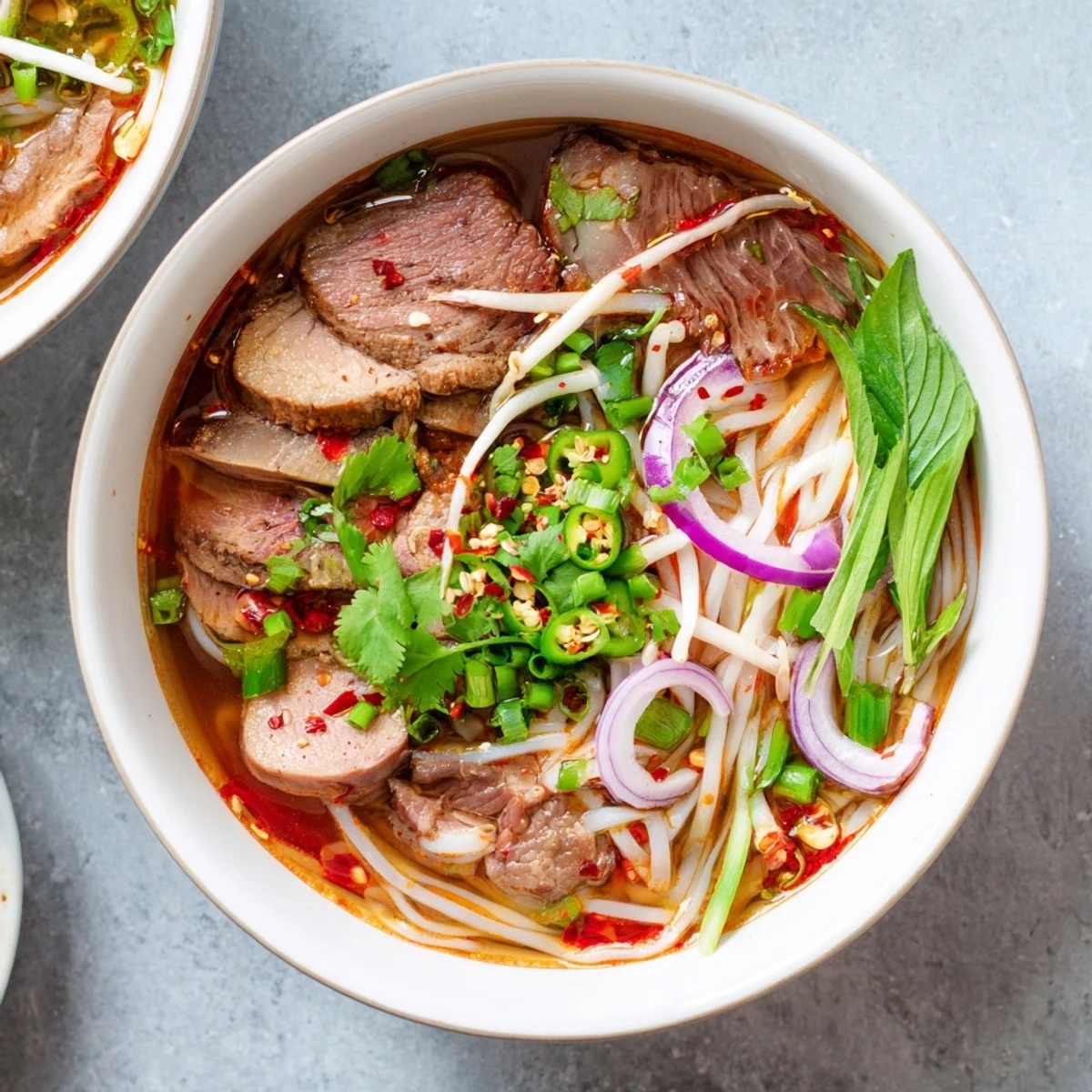
 This classic Vietnamese soup originates from Hue and delivers complex layers of flavor through its carefully simmered broth. The foundation combines beef shank and pork hock, slow-cooked for hours with bruised lemongrass, onion, garlic, and ginger. A signature aromatic chili oil infused with annatto seeds gives the broth its distinctive red hue while adding depth and gentle heat.
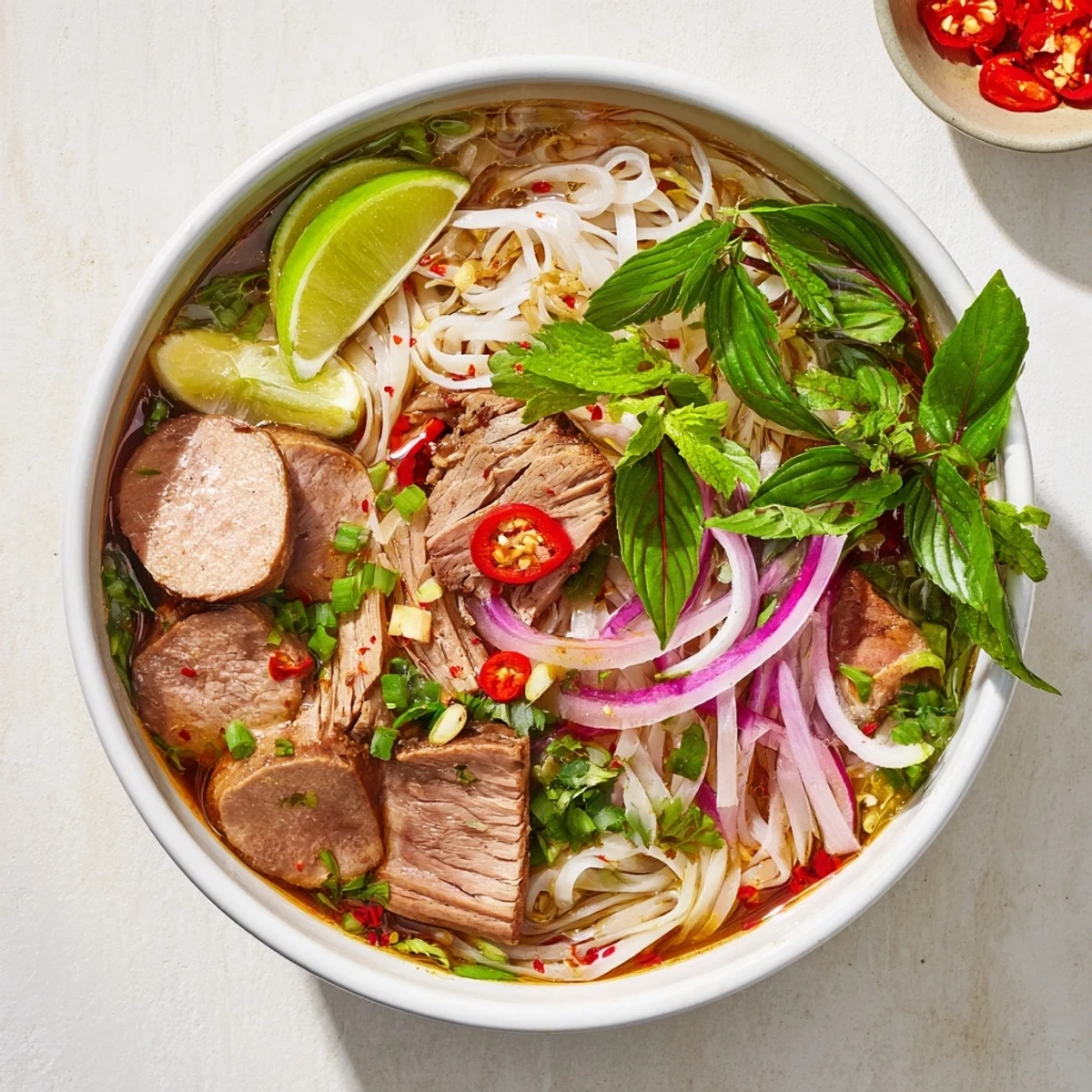
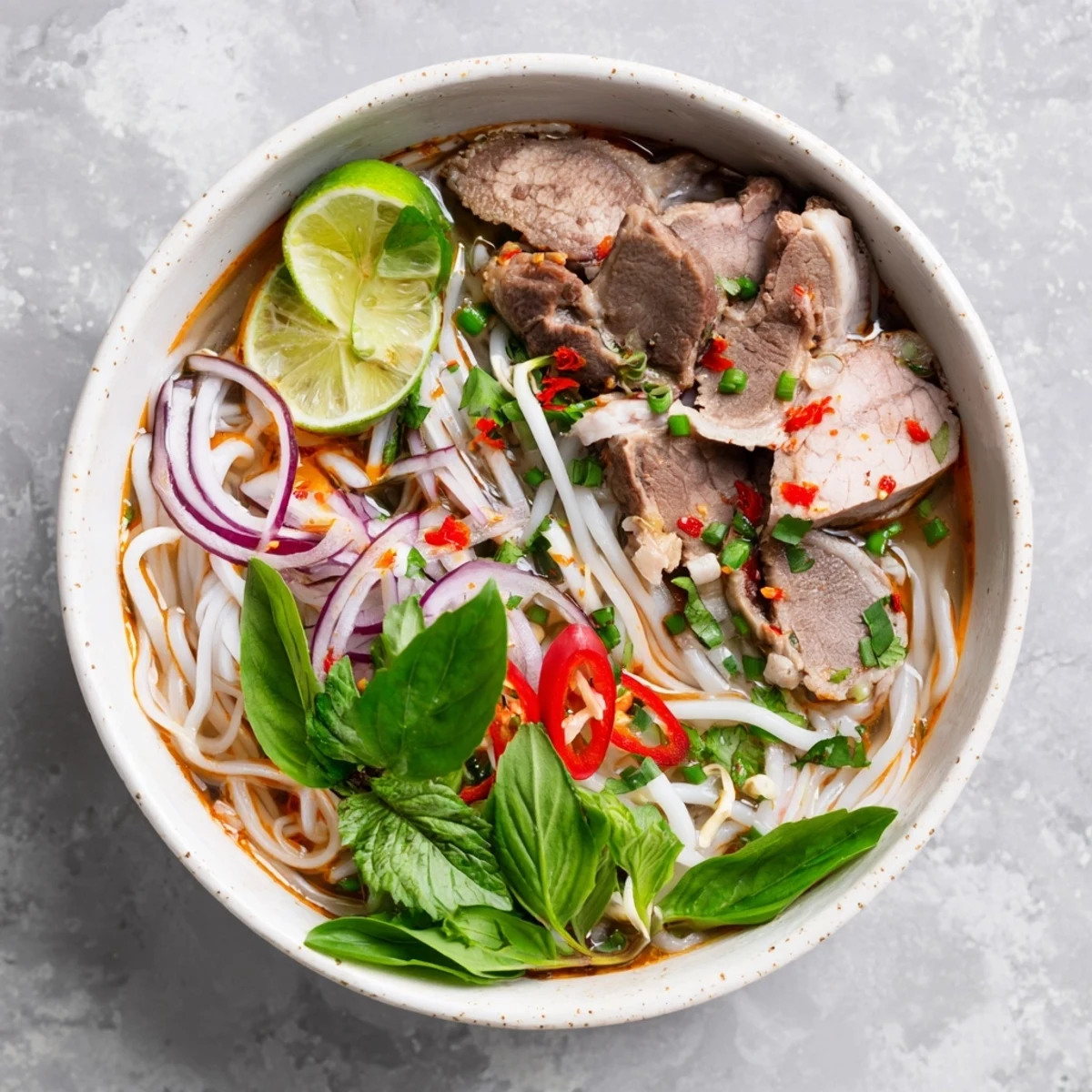
Thick round rice noodles provide the perfect base, topped with thinly sliced beef brisket, pork hock, and optional traditional elements like pork blood cubes and Vietnamese sausage. Fresh garnishes including bean sprouts, banana blossom, cilantro, mint, and Thai basil add brightness and texture. The final touch comes from lime wedges and extra chili slices, allowing each person to customize their bowl.
While the total time investment spans three hours, most of that involves passive simmering to develop the rich, aromatic broth. The result is an incredibly satisfying meal that serves six and showcases the sophisticated balance of spicy, savory, and fresh flavors that define central Vietnamese cuisine.
The first time Bun Bo Hue entered my life was through a tiny hole-in-the-wall restaurant where the owner's grandmother stirred the biggest pot I've ever seen. She told me that good Bun Bo Hue needs to make you sweat just a little, that the heat is how you know it's alive. That afternoon, watching her pour that ruby-red chili oil into steaming bowls, I understood why this soup from Hue has such fierce devotion.
Last winter, during that week when everything felt grey and heavy, I decided to tackle this soup properly. My apartment smelled like lemongrass and toasted shallots for days, neighbors actually knocked on my door asking what I was making. That night, six people crowded around my tiny table, and we ate in that comfortable silence that only happens when food is this good.
Ingredients
- Beef shank bone-in: The bone creates that rich foundation, and I've learned to ask the butcher to leave some marrow intact for extra depth
- Pork hock: This adds gelatin and body that makes the broth feel luxurious in your mouth
- Lemongrass stalks: Bruise them with the back of your knife to release those citrusy oils, this is the heart of the soup's personality
- Shrimp paste: Fermented and intense, this is the secret ingredient that makes the broth taste authentic, not just beefy
- Annatto seeds: They give the oil that signature red-orange color without adding much heat
- Thick rice noodles: The round noodles hold up better in hot broth than flat ones, they've got more character
- Cha lua: These Vietnamese pork sausages add a bouncy texture that contrasts beautifully with the tender beef
Instructions
- Build Your Foundation:
- Start the broth by par-boiling the beef shank and pork hock for five minutes, then drain and rinse everything thoroughly. This step removes impurities that would cloud your final soup, and it's worth the extra effort for clarity.
- Simmer Slow and Steady:
- Return the meat to the pot with fresh water and add your bruised lemongrass, halved onion, smashed garlic, and sliced ginger. Let it come to a rolling boil first, skimming any foam that rises to the surface, then reduce to a gentle bubble for two hours.
- Season with Intention:
- Add your fish sauce, salt, both sugars, and that crucial shrimp paste. Taste as you go, adjusting until the broth hits that perfect balance of savory, sweet, and slightly funky. Remove the meat and slice it into bite-sized pieces while the broth continues to develop.
- Create the Red Oil:
- Heat vegetable oil and annatto seeds until the oil turns a deep sunset color, then discard the seeds. Sauté minced shallots and garlic until they're fragrant and golden, then stir in chili flakes until everything is infused and gorgeous.
- Bring It Together:
- Cook those thick noodles according to the package, then divide them among six bowls. Layer in the sliced beef shank, pork hock, brisket, blood cubes if you're using them, and those rounds of cha lua.
- The Grand Finish:
- Ladle the piping hot broth over everything, watching the steam rise up. Drizzle each bowl with your vibrant chili oil, then let everyone add their own garnishes—lime, bean sprouts, herbs, and plenty of sliced chili.
 Save to Pinterest
 My friend Minh once told me that in Hue, families spend the entire Sunday making this soup together, someone tending the broth while others prep endless garnishes. Now whenever I make it, I think about how food connects us to places we've never been and people we've never met.
Getting the Balance Right
The broth should taste slightly more intense than you think is necessary, because the noodles and garnishes will mellow it out. I always add a final splash of fish sauce right before serving, just to wake everything up again. Trust your palate more than the recipe measurements after that first taste.
The Art of Garnishing
Banana blossom adds this incredible crunch that most people skip, but I urge you to find it at an Asian market. The combination of cold crisp vegetables against hot spicy broth is what makes each bite exciting. Tear the herbs with your hands instead of cutting them, it releases more oils and feels more honest somehow.
Make-Ahead Magic
The broth actually improves overnight, so I often make it a day ahead and refrigerate the fat that rises to the top. Skim it off before reheating for a cleaner soup. You can also slice all the proteins in advance and keep them separated in the fridge, making assembly almost effortless when it's time to eat.
- Cook noodles fresh each time, leftover noodles are sad and swollen
- Keep the chili oil separate so heat-sensitive diners can control their spice level
- Never refrigerate assembled bowls, the noodles will drink all the broth
 Save to Pinterest
 There's something profoundly satisfying about making a soup that demands this much attention and care. Serve it to people you love, and watch how something as simple as a bowl of soup can turn an ordinary dinner into a memory.
Questions & Answers About the Recipe
- → What makes Bun Bo Hue different from Pho?
-
Bun Bo Hue features a spicier, more complex broth with lemongrass and shrimp paste as key ingredients. The noodles are thicker and rounder compared to Pho's flat rice noodles. Additionally, Bun Bo Hue often includes pork hock and sometimes pork blood cubes, while Pho typically focuses solely on beef.
- → Can I make this less spicy?
-
Absolutely. Reduce the amount of chili flakes in the aromatic oil and omit the fresh bird's eye chili garnish. The broth's heat comes primarily from these additions, so adjusting them allows you to control the spice level while maintaining the soup's signature flavor profile.
- → Is shrimp paste essential for this dish?
-
Shrimp paste (mam ruoc) contributes a distinct depth and umami characteristic of authentic Bun Bo Hue. While optional, omitting it will change the traditional flavor profile. Fish sauce provides some savory notes, but the paste adds a unique fermented complexity that defines this regional specialty.
- → What can I substitute for pork blood cubes?
-
Pork blood cubes are traditional but entirely optional. You can simply omit them without significantly affecting the overall experience. Some cooks add extra beef brisket or pork hock pieces instead. Others incorporate tofu puffs as a vegetarian-friendly addition that absorbs the flavorful broth.
- → How long does the broth keep in the refrigerator?
-
The strained broth keeps well for up to 5 days when refrigerated in an airtight container. For longer storage, freeze it for up to 3 months. When reheating, bring the broth to a gentle simmer before assembling bowls. The noodles, proteins, and garnishes should always be prepared fresh for the best texture and flavor.
- → Can I use a pressure cooker to reduce cooking time?
-
Yes, a pressure cooker can significantly reduce the broth cooking time to about 45-60 minutes while still developing good flavor. However, traditional slow simmering allows for more nuanced depth as the ingredients break down gradually. If using a pressure cooker, you may want to finish the broth with an additional 30 minutes of stovetop simmering to meld the flavors.