
 Save to Pinterest
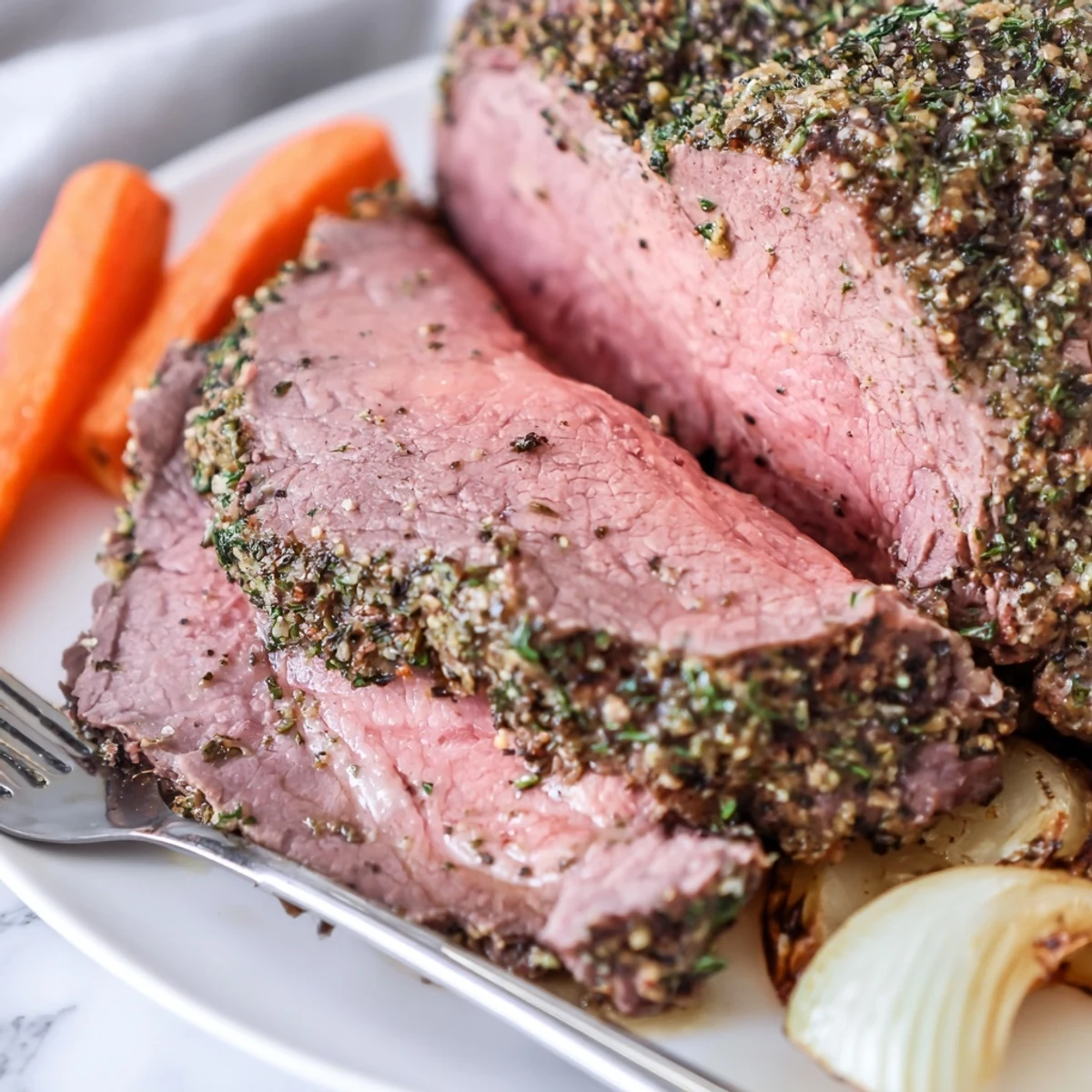
 This dish features a premium beef topside coated with a fresh herb mixture including parsley, rosemary, and thyme. The flavorful crust seals in juices while roasting on a bed of aromatic vegetables. Cooked to desired doneness, the meat rests to retain moisture before slicing. Perfect for a comforting main served alongside roasted roots or traditional sides, it brings a blend of fragrant herbs and tender beef in every bite.
Years ago, I brought this herb crusted roast beef to a casual Sunday dinner, and watching people's faces light up when they cut into that golden crust made me realize I'd stumbled onto something special. The combination of mustard, fresh herbs, and garlic creates this savory shell that locks in the meat's tenderness—it's the kind of dish that feels fancy but comes together without fuss. Since then, it's become my go-to when I want to impress without spending hours in the kitchen. Every time I make it, someone asks for the recipe.
I'll never forget the winter I made this for my in-laws—I was nervous, the oven felt temperamental, and I kept checking the meat thermometer like it might suddenly lie to me. But something clicked when I pulled it out, let it rest, and carved those perfect pink slices. My father-in-law had seconds, and that quiet nod of approval meant more than any compliment.
Ingredients
- 1.5 kg beef topside roast: Trimmed and at room temperature, this cut is lean and forgiving—it roasts evenly and slices beautifully without falling apart.
- Olive oil and Dijon mustard: The mustard adds tang and helps the herbs stick while the oil carries flavor and prevents the crust from drying out.
- Fresh parsley, rosemary, and thyme: Fresh herbs matter here—they'll smell incredible as the roast cooks and deliver brightness that dried herbs can't match.
- Garlic cloves: Minced fine so they cook into the crust rather than burn, adding depth without any harsh notes.
- Onion, carrots, and celery: These aren't just flavor—they create a natural trivet that keeps the meat elevated so heat circulates underneath.
- Sea salt and black pepper: Coarse salt lets you control the saltiness more easily than fine salt, and freshly ground pepper tastes sharper and more alive.
Instructions
- Bring the beef to room temperature:
- Pull it from the fridge 30 minutes ahead and preheat your oven to 200°C (400°F). This step is quiet but crucial—cold meat won't cook evenly, and you want the outside to be golden before the inside is done.
- Make the herb paste:
- Mix olive oil, Dijon mustard, parsley, rosemary, thyme, minced garlic, salt, and pepper in a small bowl until it looks like wet sand. The smell at this moment is a preview of what's coming.
- Prepare the roasting tin:
- Pat your beef completely dry with paper towels—this helps the crust adhere better. Arrange onion, carrots, and celery in the tin to create a trivet, then nestle the beef on top.
- Coat the beef:
- Rub that herb mixture all over the meat, pressing gently so it sticks. Don't be shy—cover every exposed surface.
- Start roasting hot:
- Roast at 200°C for 20 minutes, then drop the temperature to 180°C (350°F) and continue for about 1 hour 10 minutes. Use a meat thermometer—54°C for medium-rare, 60°C for medium—it removes all the guesswork.
- Rest before carving:
- Remove the beef, loosely cover it with foil, and let it sit undisturbed for at least 20 minutes. This is when the meat reabsorbs its juices and stays tender when you slice it.
- Slice and serve:
- Carve against the grain into clean slices and serve with the pan juices pooled underneath. The vegetables from the tin are soft enough to eat alongside.
 Save to Pinterest
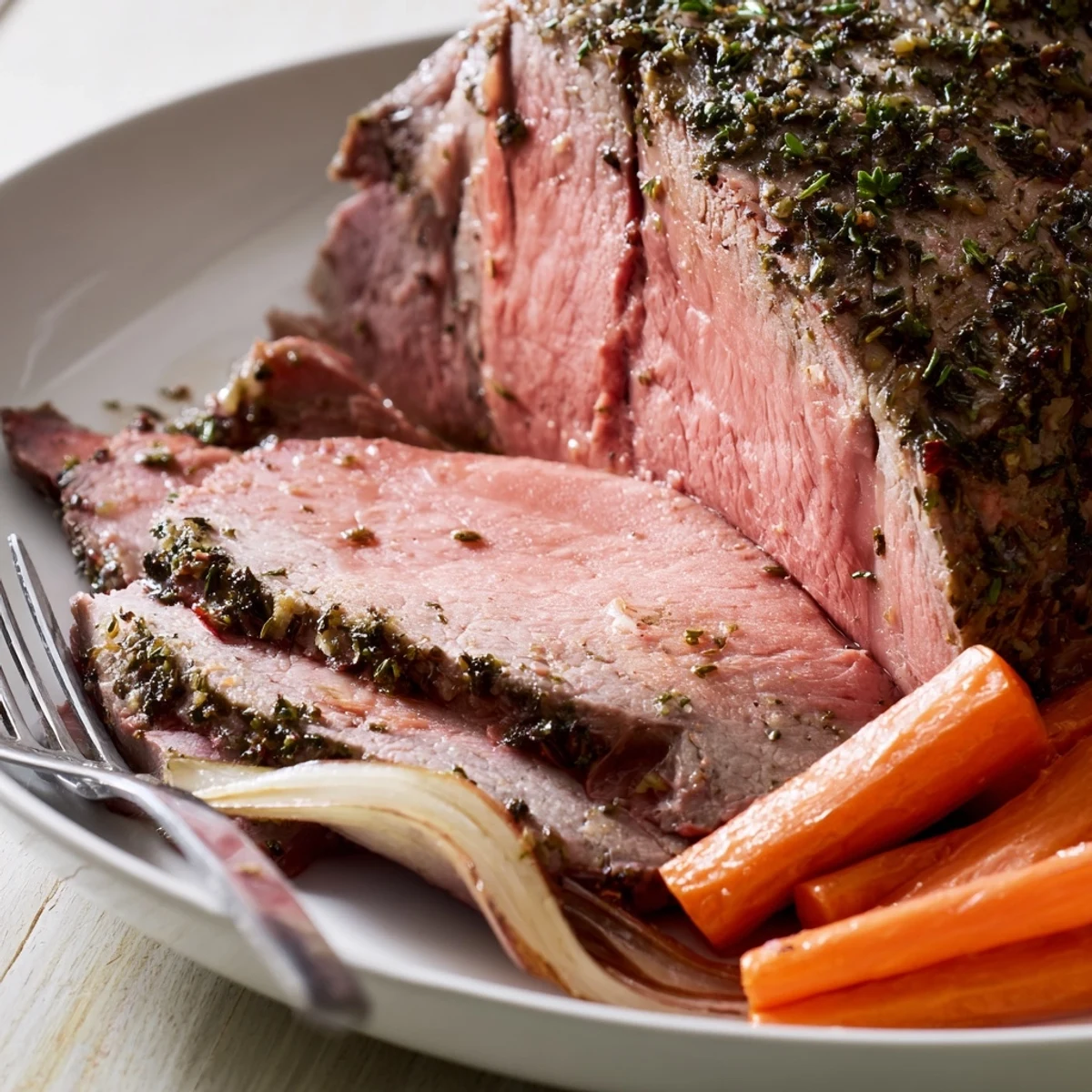
 There's something deeply satisfying about carving into a roast at the table and having everyone go quiet for just a moment. That herb crust catches the light, the meat is blushing pink inside, and suddenly an ordinary weeknight dinner feels like a celebration.
Building Flavor in the Pan
The vegetables underneath aren't just there for looks—as the beef roasts, they soften and their juices mix with the meat's fat and the herb crust to create something you'll want to spoon over everything. If you want even richer pan juices, pour a splash of red wine into the tin after removing the beef, let it sizzle for a minute, and scrape up all the browned bits. That's where the deepest flavors hide.
Choosing Your Beef Cut
Topside is lean and affordable, which means it needs respect—it's not forgiving like a fattier cut. That's why the herb crust and the vegetable trivet matter so much. The crust seals in moisture, and roasting it at a moderate temperature prevents the outside from overcooking before the inside is done. I've tried other cuts, but topside remains my favorite because it forces you to cook mindfully, and the payoff is clean, pure beef flavor.
Wine and Sides That Work
This roast pairs beautifully with full-bodied reds—a Bordeaux or Burgundy if you're splurging, or a good Côtes du Rhône if you're keeping it simple. For sides, think about what will soak up those pan juices: creamy mashed potatoes, roasted root vegetables, or Yorkshire pudding if you want to go traditional British. A simple green salad with mustard vinaigrette echoes the herb crust and cuts through the richness.
- Serve the pan juices in a small jug so guests can add as much as they want.
- If making ahead, the roast can be cooked in the morning and gently reheated, though fresh-roasted is always better.
- Leftover slices transform into incredible sandwiches—pile them on crusty bread with horseradish cream or more of that herb mixture.
 Save to Pinterest
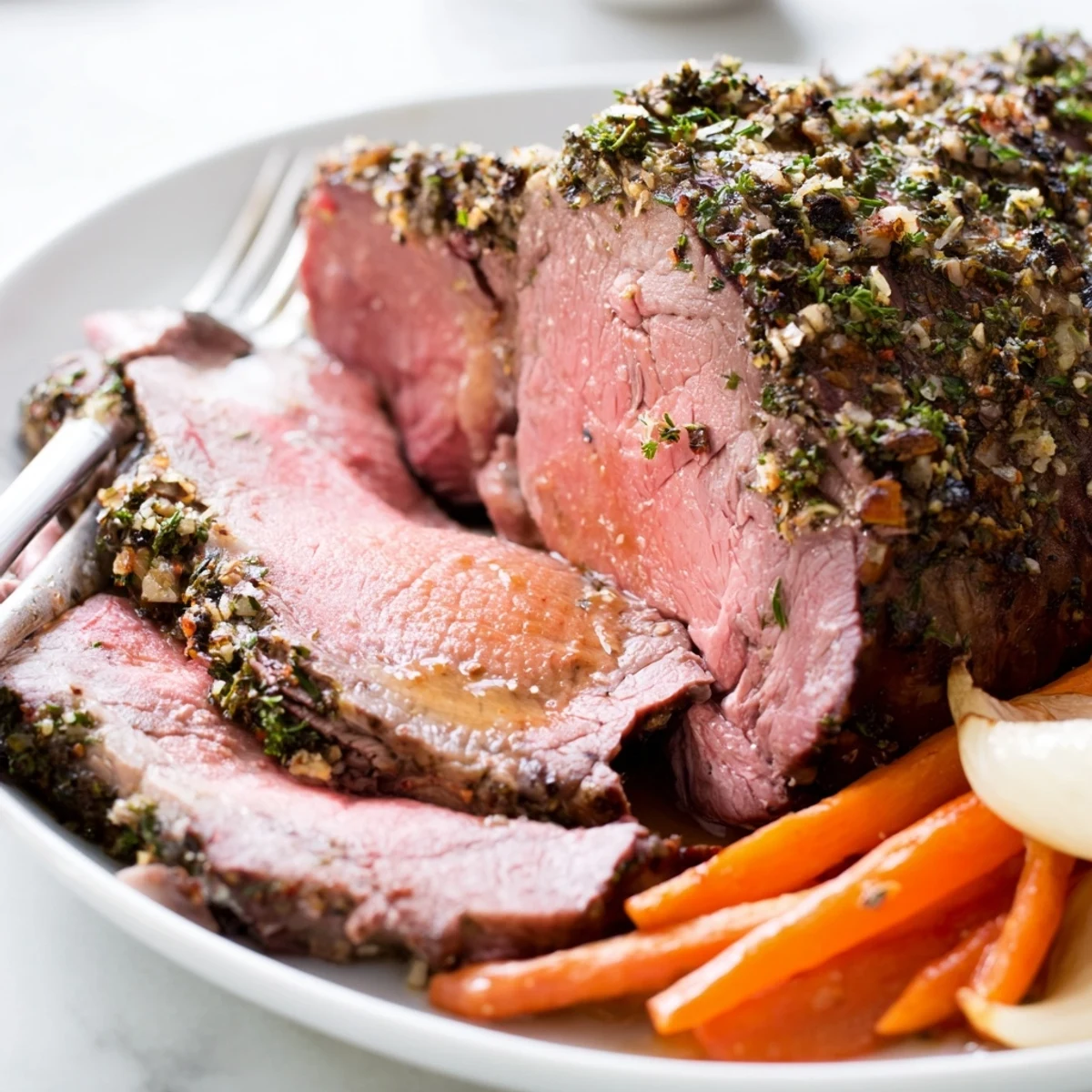
 This roast beef has become one of those recipes I make without thinking—my hands know how to mix the herb paste, my eyes know when the crust looks right. That's when you know a dish has truly become yours.
Questions & Answers About the Recipe
- → How do you prepare the herb crust for the beef?
-
Combine olive oil, Dijon mustard, finely chopped parsley, rosemary, thyme, minced garlic, sea salt, and black pepper to form a paste. Rub this mixture evenly over the beef topside before roasting.
- → What vegetables are used for roasting under the beef?
-
Onion slices, large chunks of carrots, and celery sticks are arranged in the roasting tray to create a flavorful base and natural trivet for the beef.
- → How can I check the doneness of the beef?
-
Use a meat thermometer inserted into the thickest part of the beef. Medium-rare is 54°C (130°F), medium is 60°C (140°F). Adjust roasting time accordingly.
- → What resting time is recommended after roasting?
-
Allow the beef to rest covered loosely with foil for at least 20 minutes. This helps redistribute the juices and results in a juicier, more tender roast.
- → Can the mustard be substituted in the herb coating?
-
Yes, English mustard can be used instead of Dijon mustard for a spicier, more robust flavor in the herb crust.
- → What sides complement this roast beef best?
-
Roast potatoes, Yorkshire pudding, and the pan juices from the vegetables make classic accompaniments, enhancing the meal's traditional British character.