
 Save to Pinterest
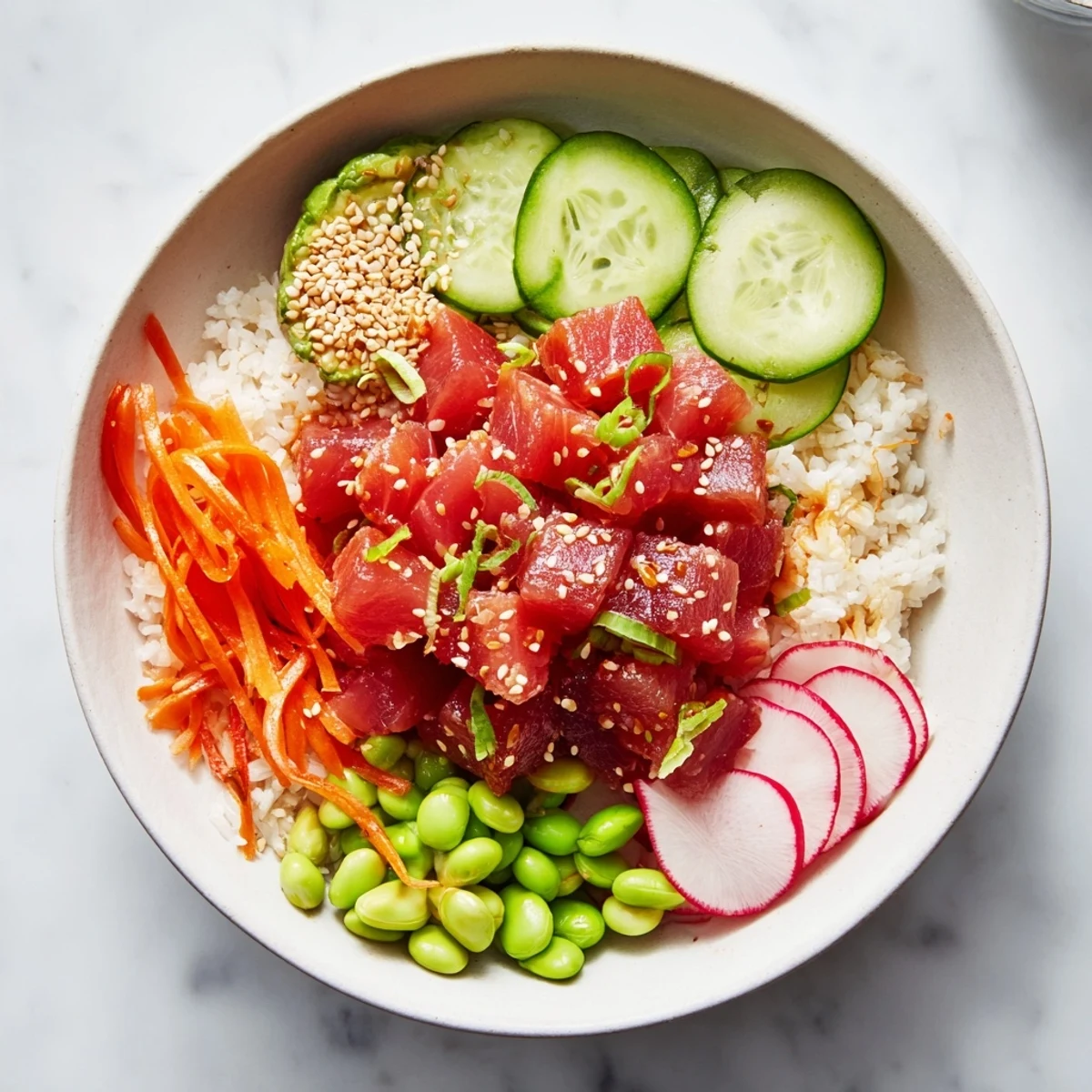
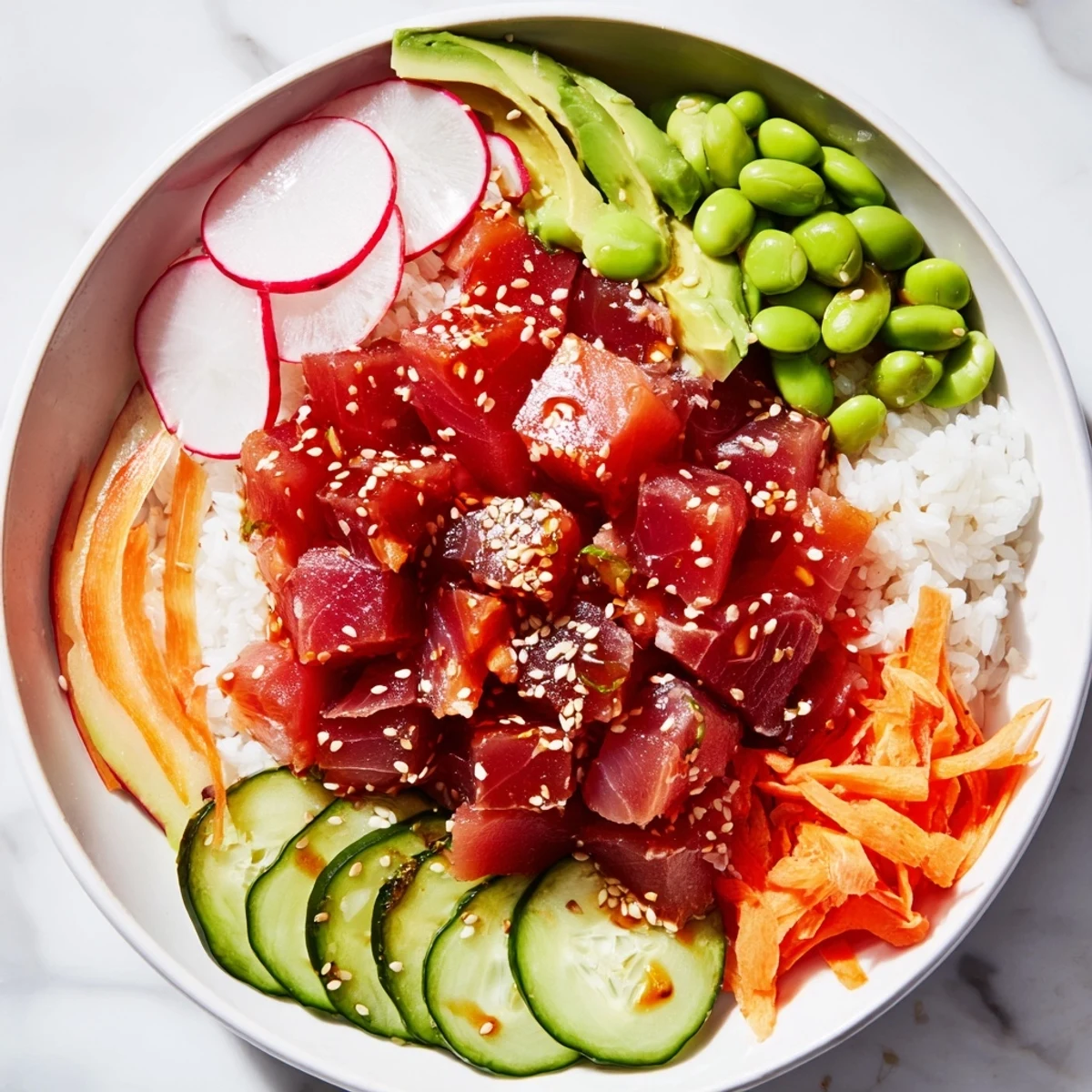
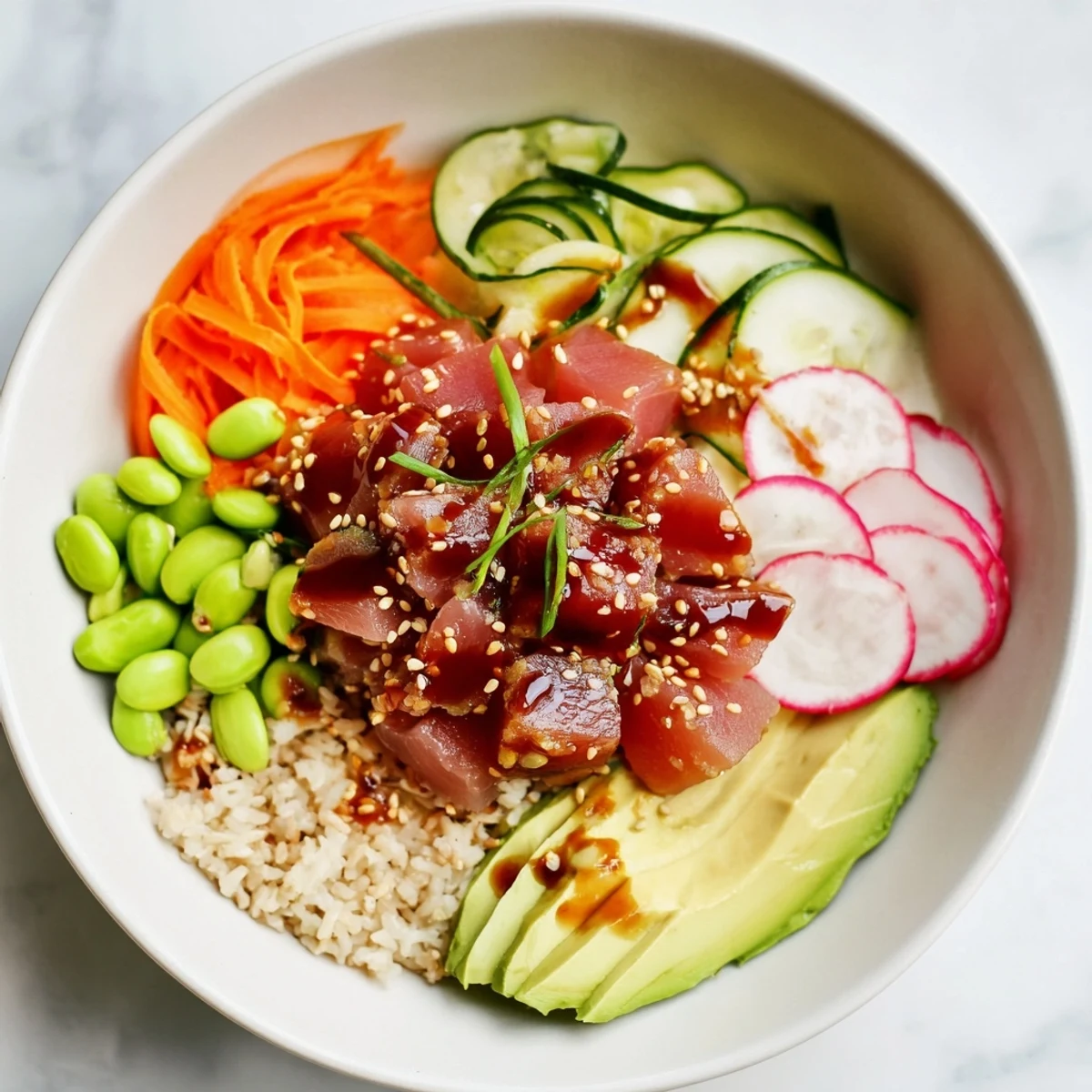
 This vibrant tuna bowl features tender diced tuna paired with crisp cucumber, carrot, avocado, and edamame over cooled sushi rice. A bright dressing of soy, rice vinegar, sesame oil, honey, lime, and a touch of sriracha enhances each bite. Finished with nori strips, sesame seeds, and scallions, it's a refreshing and well-balanced meal ready in 20 minutes. Variations include swapping tuna for tofu or using alternative grains like quinoa or cauliflower rice.
There's something about assembling a tuna bowl that makes me feel like I'm on a tiny vacation in the middle of a regular Tuesday. A friend brought me one from a local spot years ago, and I was struck by how the cold rice held all these bright, crisp vegetables like they were treasures waiting to be discovered. I wanted to recreate that exact feeling—that sense of eating something fresh and intentional—but at home, where I could make it exactly the way I wanted.
I made this for my partner on a summer evening when the kitchen was still hot from the day, and we ate it on the porch as the light turned golden. The tuna had this delicate sweetness from the sesame oil and honey, and somehow everything tasted brighter when eaten outside, in that moment of quiet before dusk. It became our go-to when we wanted something that felt restaurant-quality but required no stress.
Ingredients
- Sushi-grade tuna, diced: This is where quality truly matters—look for vibrant, deep red color and buy from a trusted fishmonger who specifically sells sushi-grade. It should feel silky, never grainy.
- Cooked sushi rice or jasmine rice: Day-old cooled rice works beautifully here; warm rice will make everything mushy and sad. The grains stay separate and give that perfect textural contrast.
- Cucumber, thinly sliced: I use a mandoline when I'm not worried about my fingertips, but a sharp knife and patience work just as well. The thinness matters—it should feel delicate on your tongue.
- Carrot, julienned: Cut them into thin matchsticks so they integrate naturally with the rice and don't feel like you're eating raw carrot sticks. A vegetable peeler can create ribbons too if you want to play around.
- Avocado, sliced: Add this close to serving time so it doesn't brown or turn mealy. Ripe but still firm is the goal—it should yield gently to pressure but not feel mushy.
- Edamame: Frozen edamame, boiled and shelled, brings a mild nuttiness and that satisfying pop between your teeth. Buy pre-shelled if you want to skip that step entirely.
- Pickled ginger: This is optional but transforms the bowl—it cuts through richness and adds a whisper of heat that wakes everything up.
- Nori sheets, cut into strips: Toast them lightly over a flame or keep them raw—either adds a briny, umami note that anchors the whole bowl.
- Low-sodium soy sauce or tamari: Use tamari if you need gluten-free; it has a slightly deeper, less salty flavor that I actually prefer.
- Rice vinegar: This should be mild and slightly sweet, not harsh—it's the backbone that brings all the flavors into focus.
- Toasted sesame oil: A little goes a long way; this oil is concentrated liquid gold. Buy it in small bottles and keep it in a cool, dark place so it stays fresh.
- Honey or maple syrup: This balances the dressing's acidity and salt, creating a dressing that's complex rather than one-note.
- Fresh lime juice: Squeeze it yourself—bottled tastes thin and tired. One lime typically gives you everything you need.
- Sriracha: Add it if you want heat, or leave it out for a mellow bowl. Start with a smaller amount and taste as you go.
- Toasted sesame seeds and scallions: These are your final flourish—they add texture, color, and a hint of oniony freshness.
Instructions
- Build your dressing foundation:
- Whisk together the soy sauce, rice vinegar, sesame oil, honey, and lime juice in a small bowl—you're looking for something that tastes balanced, where no single flavor overpowers. The dressing should taste good on its own, with a nice shine of oil on top.
- Prepare the tuna with intention:
- Pour about a tablespoon of dressing over your diced tuna and let it sit for five minutes so the flavors gently penetrate the delicate flesh. This brief marinating makes all the difference between tuna that's just there and tuna that sings.
- Create your rice bed:
- Divide the cooled rice between two bowls, packing it down just slightly so it forms a gentle base. The rice should be cool to the touch and smell faintly sweet, like a promise of everything that's about to happen.
- Arrange your vegetables like you mean it:
- Place the cucumber, carrot, avocado, edamame, radish, and pickled ginger on top of the rice in whatever pattern feels right—there's no rules here. Think of the bowl as a canvas where every element should be visible and beautiful.
- Center your tuna:
- Spoon the marinated tuna into the middle of each bowl so it's the focal point. The tuna should glisten from the dressing and look like the star it is.
- Drizzle the remaining magic:
- Pour the rest of your dressing over the entire bowl, letting it coat the vegetables and rice. You want enough dressing to make every bite taste connected, but not so much that the bowl becomes soup.
- Finish with flourish:
- Scatter nori strips, toasted sesame seeds, and chopped scallions across the top. Serve immediately while everything is still crisp and the dressing is settling into all the right places.
 Save to Pinterest
 I remember my mom tasting this bowl for the first time and being genuinely surprised by how satisfying it felt without being heavy. She said it was the kind of food that makes you feel good about yourself—not in a guilty-pleasure way, but in a genuine way. That's when I realized this bowl had become more than just lunch; it was a small act of nourishment and care, served in a ceramic dish.
Building Your Perfect Bowl
The beauty of this tuna bowl is that it's infinitely adaptable to what's in your kitchen or what you're craving that day. Some mornings I use brown rice instead of white for earthiness, other times I'll swap in wild rice because I want something with texture. If I've got roasted beets in the fridge, they go in. If there's leftover roasted broccoli, it finds its way to the bowl. The core stays the same, but the personality shifts based on whatever ingredients are calling to you.
Alternative Proteins and Variations
Not every day is a tuna day, and that's perfectly fine. I've made this exact bowl with marinated tofu and had friends swear they preferred it to the original—the cubes take on the dressing beautifully and become this wonderful savory-sweet counterpoint to the fresh vegetables. Grilled shrimp works too, adding a slight smokiness. Even chickpeas, if you want to skip the protein from the sea entirely and keep things purely plant-based.
Dressing It Right
The dressing is truly the character of this bowl—it's what transforms a pile of ingredients into something cohesive and memorable. I've experimented with adding a small splash of mirin for sweetness, or a touch of grated ginger to the base. Some versions I make include a whisper of white miso stirred into the dressing, which adds depth and umami without making anything taste fishy.
- Make extra dressing and keep it in a small jar in your fridge—it's amazing drizzled over plain rice or roasted vegetables through the week.
- If you're sensitive to strong flavors, reduce the sriracha or leave it out entirely; this bowl is delicious without heat.
- The dressing improves slightly after sitting for 20 minutes, so you can make it ahead and let the flavors settle together before using it.
 Save to Pinterest
 There's something deeply satisfying about making something this beautiful and nourishing in under 20 minutes. Every time I assemble this bowl, I'm reminded that restaurant-quality food doesn't require hours or stress—just good ingredients, a little intention, and a moment to make something that brings you joy.
Questions & Answers About the Recipe
- → What kind of tuna is best for this bowl?
-
Sushi-grade tuna is ideal because it ensures freshness and safety when served raw or lightly marinated.
- → Can I use other types of rice in this dish?
-
Yes, brown rice, quinoa, or cauliflower rice are great alternatives depending on your preference.
- → How should I prepare the dressing for the bowl?
-
Whisk together soy sauce, rice vinegar, toasted sesame oil, honey, fresh lime juice, and optional sriracha for a balanced, tangy dressing.
- → Is there a vegetarian alternative for the tuna?
-
Marinated tofu can be used in place of tuna to maintain texture and flavor balance.
- → What toppings add the most flavor to this bowl?
-
Nori strips, toasted sesame seeds, and chopped scallions provide a savory, crunchy contrast to the fresh ingredients.