
 Save to Pinterest
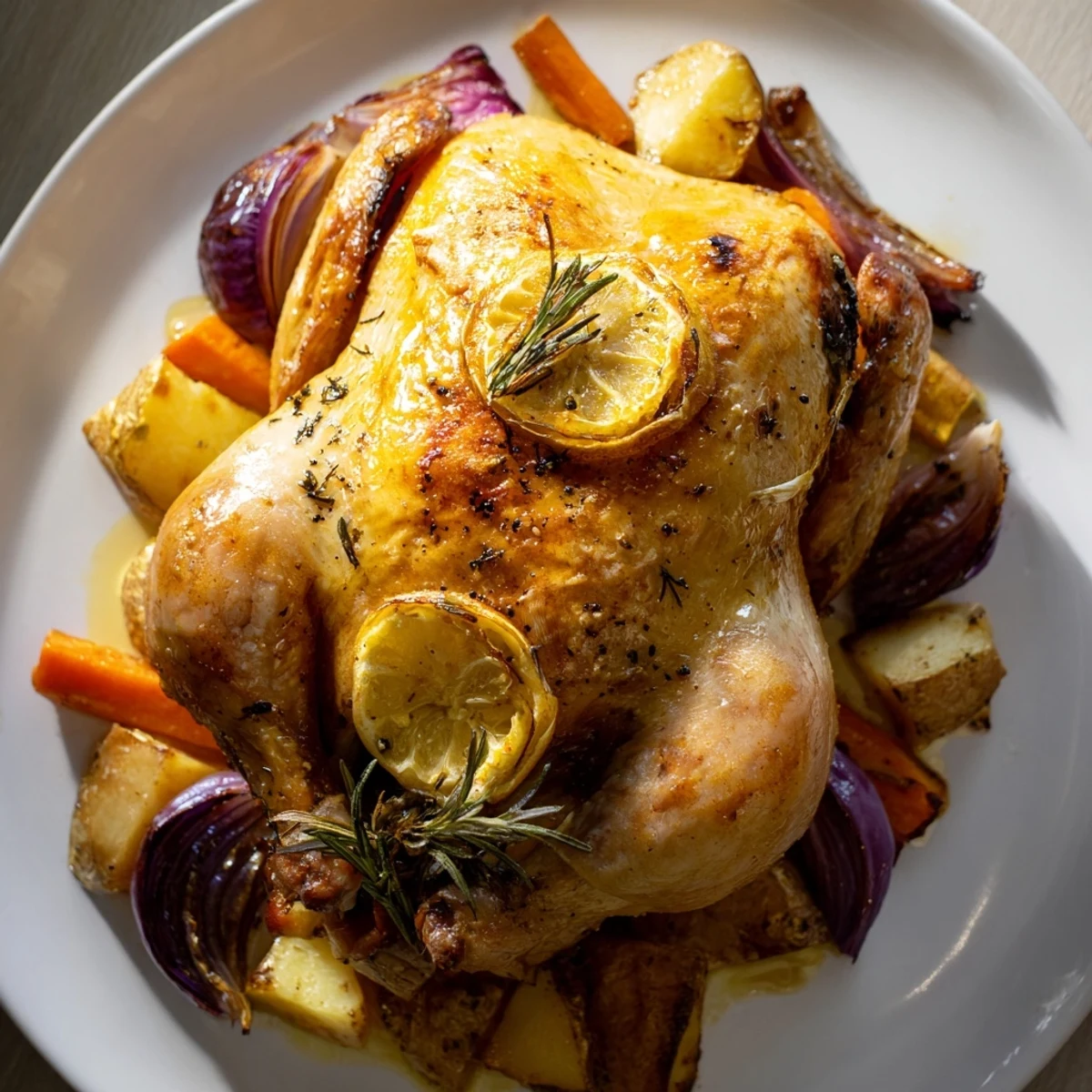
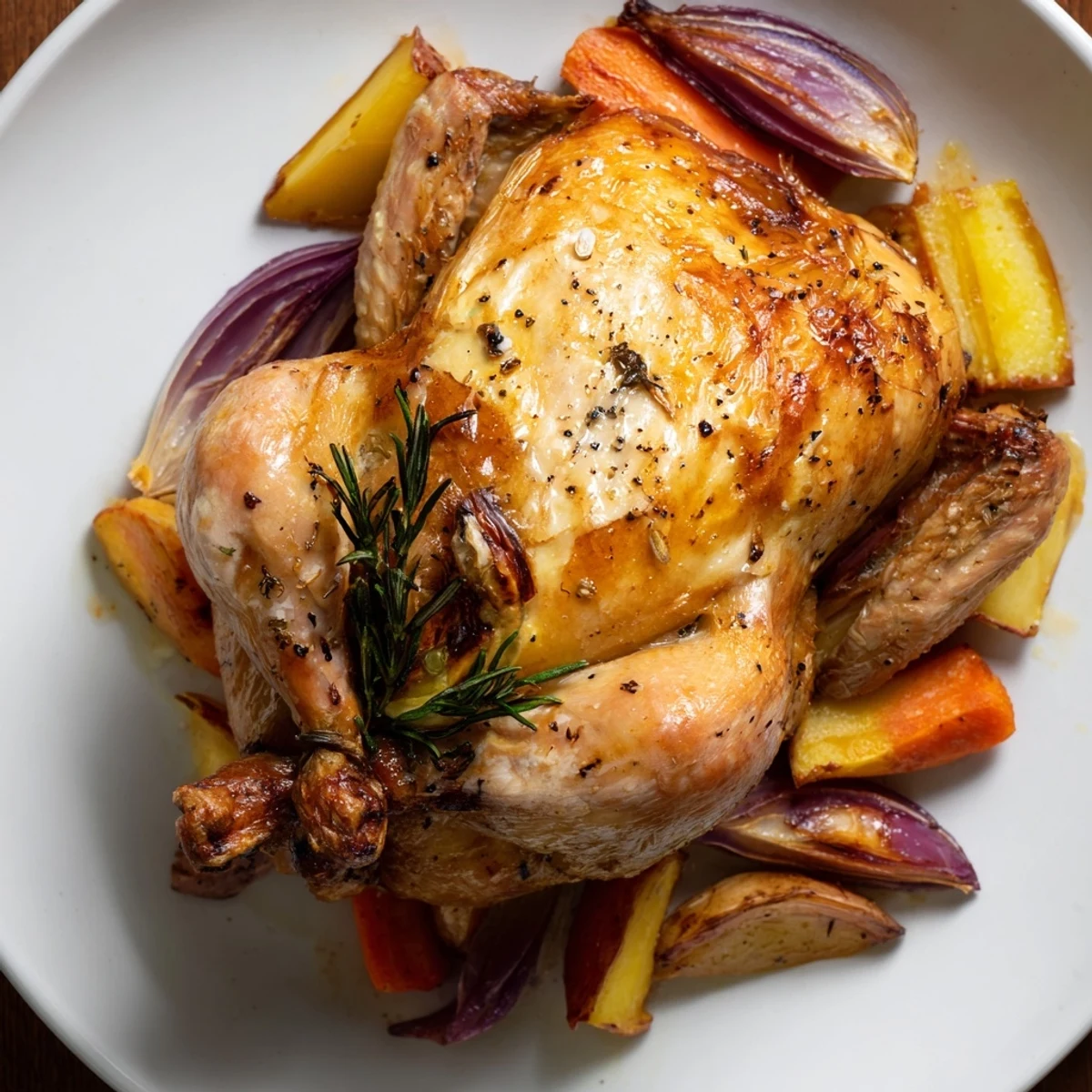
 This dish features a whole chicken rubbed with olive oil, herbs, lemon, and garlic, roasted to perfection alongside a medley of root vegetables like carrots, parsnips, potatoes, and red onions. The vegetables caramelize as they cook, absorbing pan juices and flavors. Simple steps and classic seasonings make this an easy and satisfying dinner, with tips for extra moisture using broth or wine. Resting the meat ensures juiciness and a crispy skin finish. Perfect for gatherings or cozy dinners.
My kitchen smelled like garlic and rosemary before I even turned on the oven. I was stuffing lemon halves into a whole chicken, hands slippery with olive oil, when I realized I'd forgotten to check if the giblets were still inside. They weren't, thankfully. That evening taught me that a perfectly roasted chicken doesn't require fancy skills, just patience and a hot oven.
I made this for my parents on a cold Sunday in March. My mom kept peeking into the oven, watching the chicken skin turn golden and crisp. When I pulled it out and let it rest, the vegetables were sticky with pan juices, and the whole house smelled like a holiday. We ate in silence for the first few minutes, which is always a good sign.
Ingredients
- Whole chicken: Look for one around 1.5 kg, not too big or it cooks unevenly. Pat it completely dry with paper towels or the skin won't crisp.
- Olive oil: Use enough to coat the skin and vegetables generously. This is what creates that beautiful golden color.
- Lemon: Halve it and stuff it inside the cavity. It perfumes the meat from within and keeps everything moist.
- Garlic cloves: Smash them with the side of your knife. They'll soften and sweeten as they roast.
- Fresh rosemary and thyme: Tuck them into the cavity with the lemon. Dried herbs won't give you the same fragrance.
- Carrots, parsnips, potatoes, red onions: Cut them into similar sizes so they roast evenly. The parsnips turn almost candy-like.
- Chicken broth or white wine: Optional, but it adds moisture and helps create a rich pan sauce you can spoon over everything.
Instructions
- Prep the oven and chicken:
- Preheat to 425°F. Dry the chicken thoroughly, then rub olive oil all over the skin and inside the cavity. Season generously with salt and pepper, then stuff the cavity with lemon halves, garlic, rosemary, and thyme.
- Prepare the vegetables:
- Toss carrots, parsnips, potatoes, and onions with olive oil, salt, and pepper in a large roasting pan. Spread them out in an even layer so they roast instead of steam.
- Arrange and roast:
- Place the chicken breast side up on top of the vegetables. Pour broth or wine around the edges if using. Roast for 1 hour 15 minutes, until the skin is golden and the thickest part of the thigh reads 165°F.
- Baste and toss:
- Halfway through, toss the vegetables and spoon pan juices over the chicken. This keeps everything moist and adds flavor.
- Rest and serve:
- Let the chicken rest for 10 minutes before carving. Serve with the roasted vegetables and spoon any remaining pan juices over the top.
 Save to Pinterest
 The first time I carved a whole chicken at the table, I felt like I'd unlocked some secret adult skill. My friend laughed as I fumbled with the legs, but by the end we were all reaching for seconds. It's the kind of meal that makes people linger at the table, tearing off crispy skin and mopping up juices with bread.
Choosing Your Chicken
I always look for chickens labeled organic or free-range if I can find them. They cost a bit more, but the flavor is noticeably better and the meat stays juicy. If you're buying from a butcher, ask them to remove the giblets for you. At the grocery store, just reach inside the cavity and check before you start cooking.
Getting the Vegetables Right
Cut everything into roughly two-inch pieces so they finish at the same time. I learned this after serving perfectly roasted chicken with half-raw potatoes. You can swap in sweet potatoes, turnips, or rutabaga depending on what you have. Just make sure they're all tossed in enough oil and well-seasoned, or they'll taste bland next to the chicken.
Making It Your Own
This recipe is forgiving and easy to tweak. Sometimes I add a splash of balsamic vinegar to the vegetables before roasting, or I tuck orange slices into the cavity instead of lemon. On cooler nights, I'll throw in a few whole shallots or a head of garlic cut in half. The important part is high heat, good seasoning, and letting everything roast undisturbed.
- Try tucking butter mixed with fresh herbs under the skin before roasting
- Use leftover chicken to make soup or chicken salad the next day
- Save the carcass and roasted vegetable scraps to make homemade stock
 Save to Pinterest
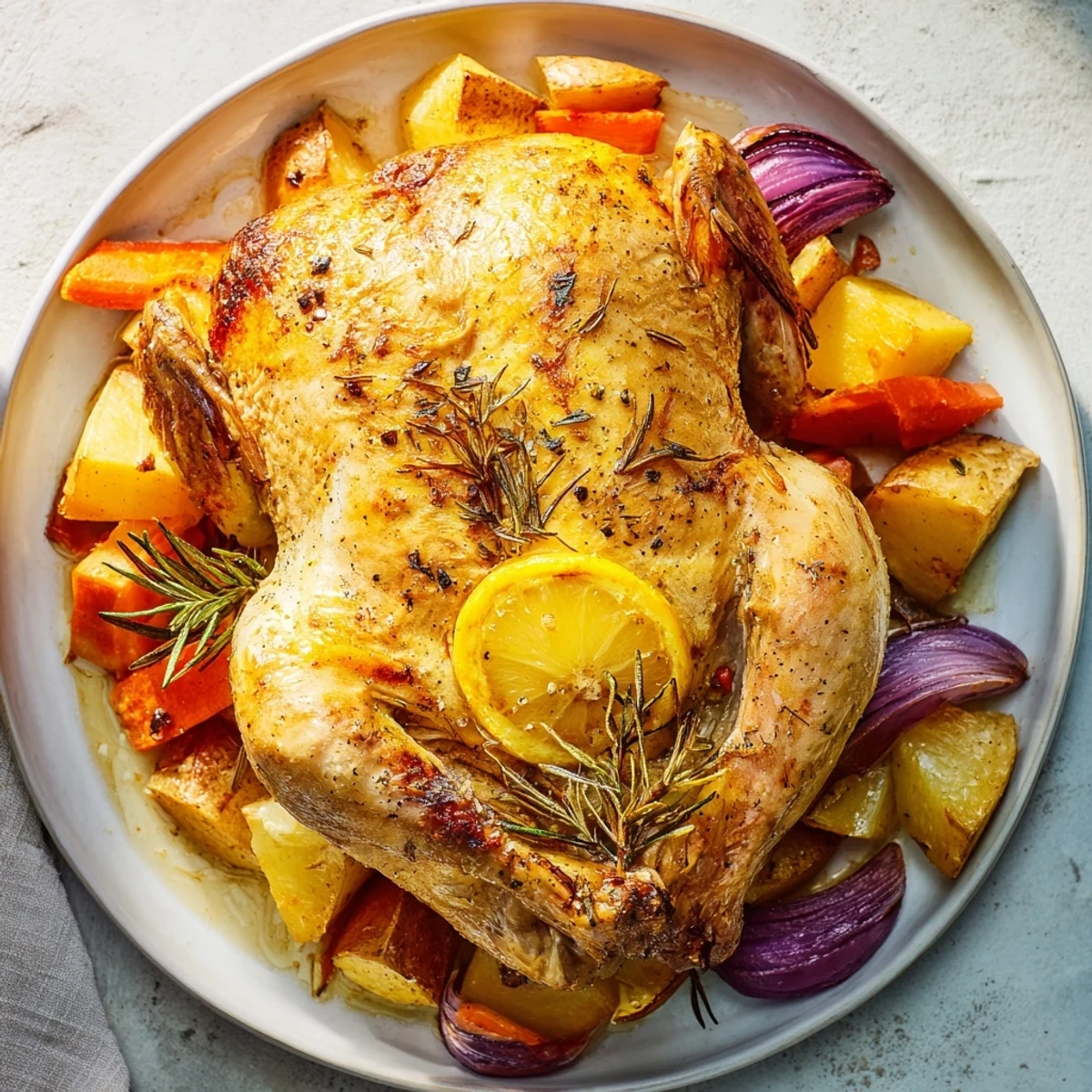
 This is the kind of dinner that feels like a hug. Serve it on a big platter, let everyone help themselves, and don't worry about perfection.
Questions & Answers About the Recipe
- → What is the best way to ensure the chicken skin is crispy?
-
Roast the bird uncovered and baste occasionally with pan juices during cooking to promote crispiness and rich flavor.
- → Can I substitute or add other vegetables to the roasting pan?
-
Yes, turnips, sweet potatoes, or rutabaga can be added or substituted to diversify the vegetable medley.
- → How do I know when the chicken is fully cooked?
-
Use a meat thermometer; the thickest part of the thigh should reach 165°F (74°C) for safe, juicy poultry.
- → Is it necessary to baste the chicken during roasting?
-
Basting halfway through cooking helps keep the meat moist and infuses additional flavor from pan juices.
- → Can I prepare this dish ahead of time?
-
Yes, leftovers can be refrigerated and repurposed into sandwiches or salads for convenient meals.