
 Save to Pinterest
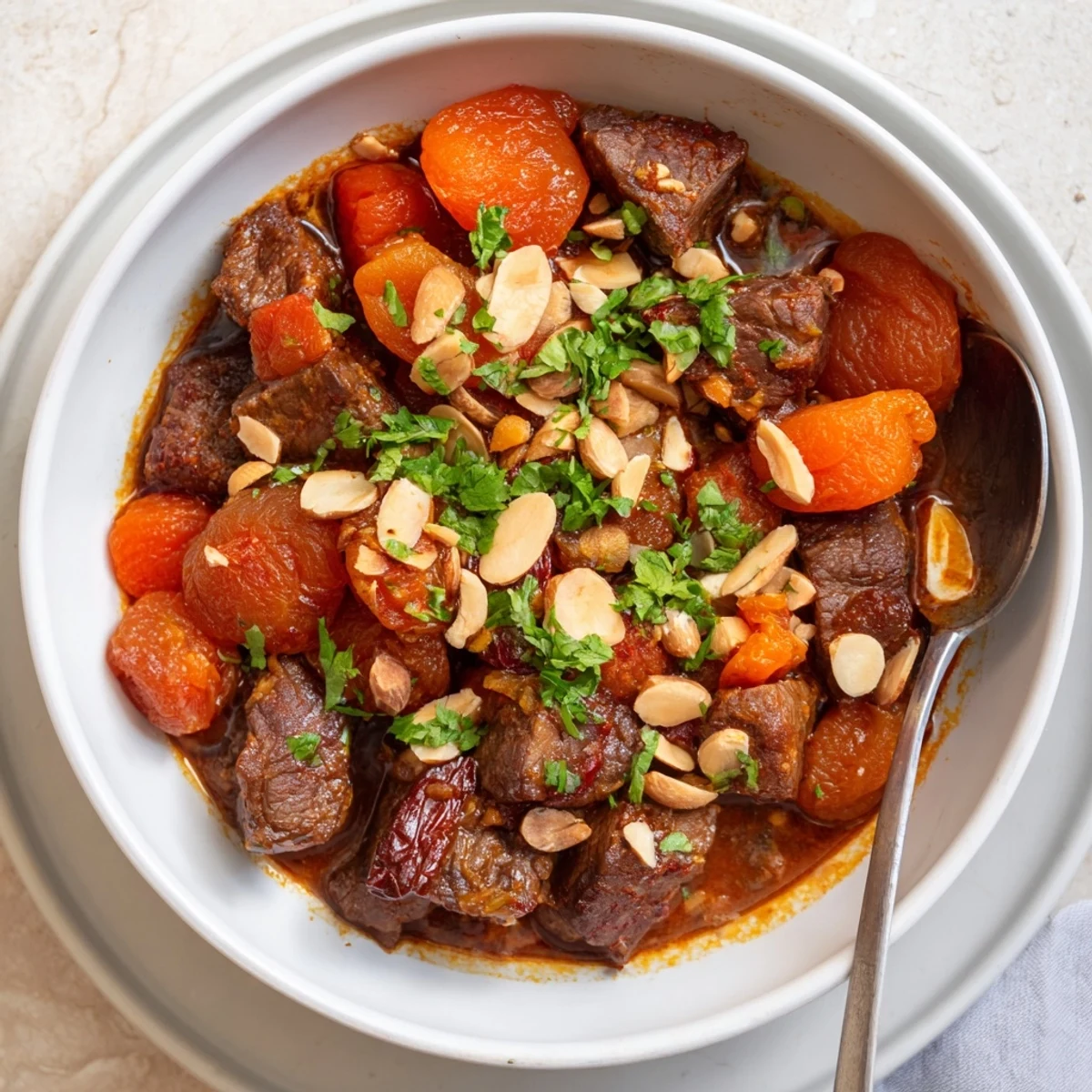
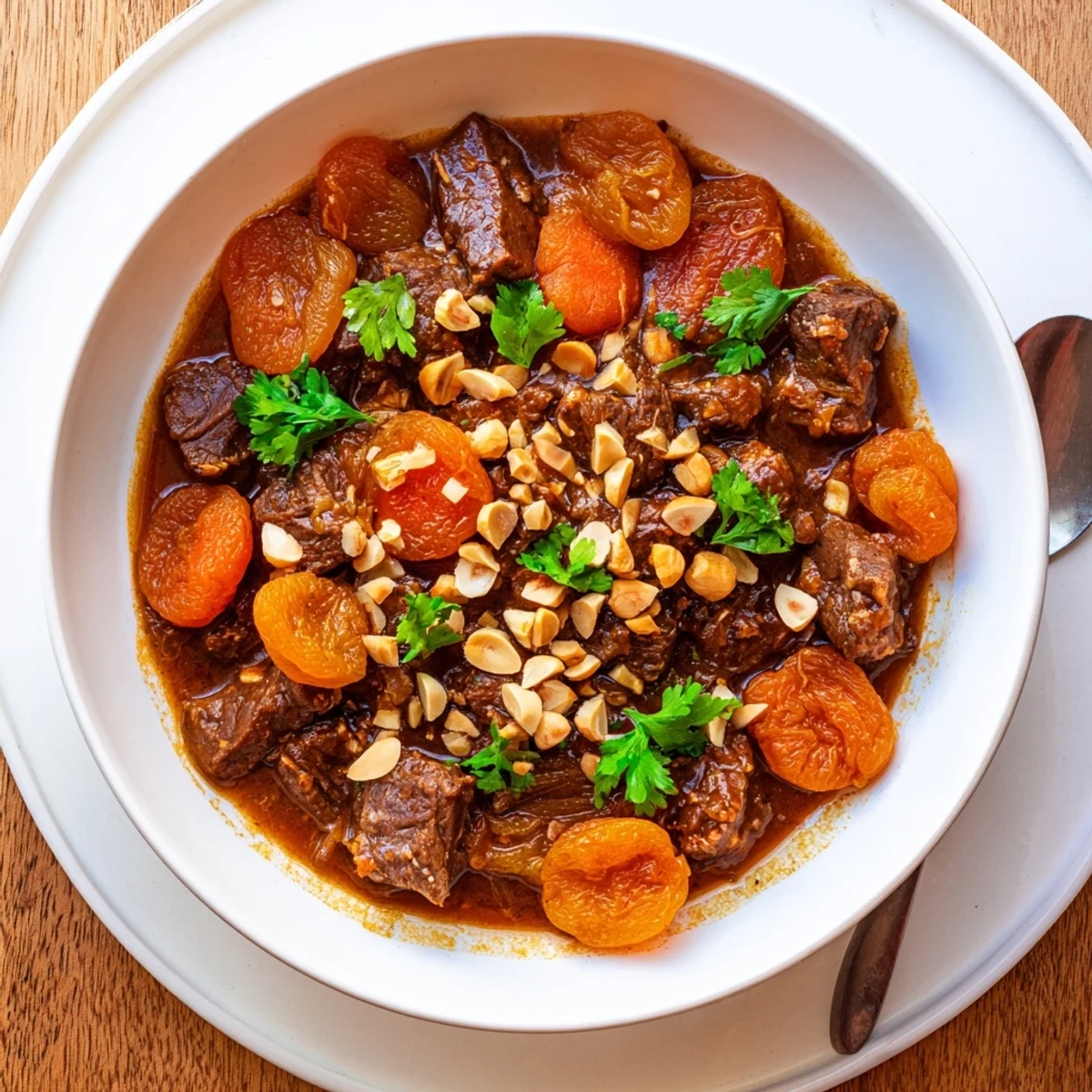
 This rich Moroccan-inspired stew combines beef chuck with sweet dried apricots, onions, carrots, and a blend of cumin, cinnamon, coriander, ginger, and turmeric. The meat browns first for depth, then simmers slowly with tomatoes and broth until meltingly tender. Apricots and honey join in the final stage, adding subtle sweetness that balances the warm spices. The result is a thick, fragrant sauce with tender beef and plump fruit.
The dish serves four beautifully over couscous or with crusty bread to soak up the flavorful sauce. Fresh cilantro or parsley and toasted almonds add brightness and crunch just before serving. It reheats wonderfully, making it excellent for meal prep or entertaining.
The first time I caught a whiff of this stew simmering, I was visiting my friend Sarah on a brutally gray February afternoon. She'd left a window cracked just enough to let the cinnamon and cumin drift through the hallway, pulling me in like a cartoon character floating on scent waves. That pot changed everything I thought I knew about winter cooking.
Last winter I made a double batch for a Sunday dinner with my brothers, and my younger brother who normally complains about fruit in savory food went back for thirds. The way the apricots melt into the sauce while the beef falls apart creates this incredible richness that feels special but isnt actually complicated to achieve.
Ingredients
- Beef chuck: This cut needs slow cooking to break down connective tissue into pure tenderness and is worth seeking out from a good butcher
- Dried apricots: Theyll plump up beautifully in the sauce so dont skip them even if youre skeptical about fruit in stew
- Cinnamon and cumin: These two are the backbone of Moroccan flavor and smell absolutely incredible when they hit the hot pot
- Honey: Just enough to bridge the gap between the savory beef and sweet fruit without making it taste like dessert
- Beef broth: Use a good quality one youd happily drink on its own because it becomes the base of everything
- Tomato paste: Adds a deep umami richness that balances the brightness of the dried fruit
- Garlic and onion: Build your flavor foundation properly here and dont rush the sauté step
- Carrots: They add natural sweetness and hold up beautifully to long cooking times
- Fresh cilantro or parsley: Dont skip the garnish because it brings a bright fresh contrast to the rich stew
Instructions
- Sear the beef properly:
- Heat the olive oil in your Dutch oven over medium high heat until it shimmers then brown the beef cubes in batches without overcrowding the pot so each piece develops that gorgeous caramelized crust that adds incredible depth to the final stew.
- Build your aromatic base:
- Add the onions and carrots to the same pot and cook them for about 5 minutes until they soften and start to pick up some of those flavorful browned bits from the bottom.
- Wake up the spices:
- Stir in the garlic and all those beautiful spices and let them cook for just a minute until the fragrance fills your kitchen and the oils start to release their essential oils.
- Let it work its magic:
- Reduce the heat to low cover the pot and let it simmer slowly for an hour and a half giving it an occasional stir and resisting the urge to lift the lid too often.
- Add the sweet element:
- Stir in the dried apricots and honey then continue cooking uncovered for another 30 minutes until the beef is fork tender and the sauce has thickened beautifully.
- Finish with thought:
- Taste the stew and adjust the seasoning if needed then skim any excess fat from the surface before serving over couscous or with plenty of crusty bread.
 Save to Pinterest
 My mother in law asked for the recipe after one bite and now she makes it every time we visit in the winter. Theres something about the combination of warming spices and sweet fruit that just makes people feel cared for.
Getting The Right Consistency
The sauce should coat the back of a spoon but not be thick like gravy. If its too thin after the final cooking time just simmer it a bit longer uncovered and if its too thick splash in a little more broth.
Make It Your Way
Lamb shoulder works beautifully here and actually feels more traditional to the Moroccan roots of the dish. You can also add sweet potatoes or bell peppers if you want to bulk up the vegetables.
Serving Suggestions
This stew deserves something to soak up all that incredible sauce. fluffy couscous is the classic choice but crusty bread works just as well and maybe even better for catching every drop.
- Warm your serving bowls because this stew stays hot for ages
- Set out extra toasted almonds at the table for crunch
- A simple green salad with lemon dressing cuts through the richness perfectly
 Save to Pinterest
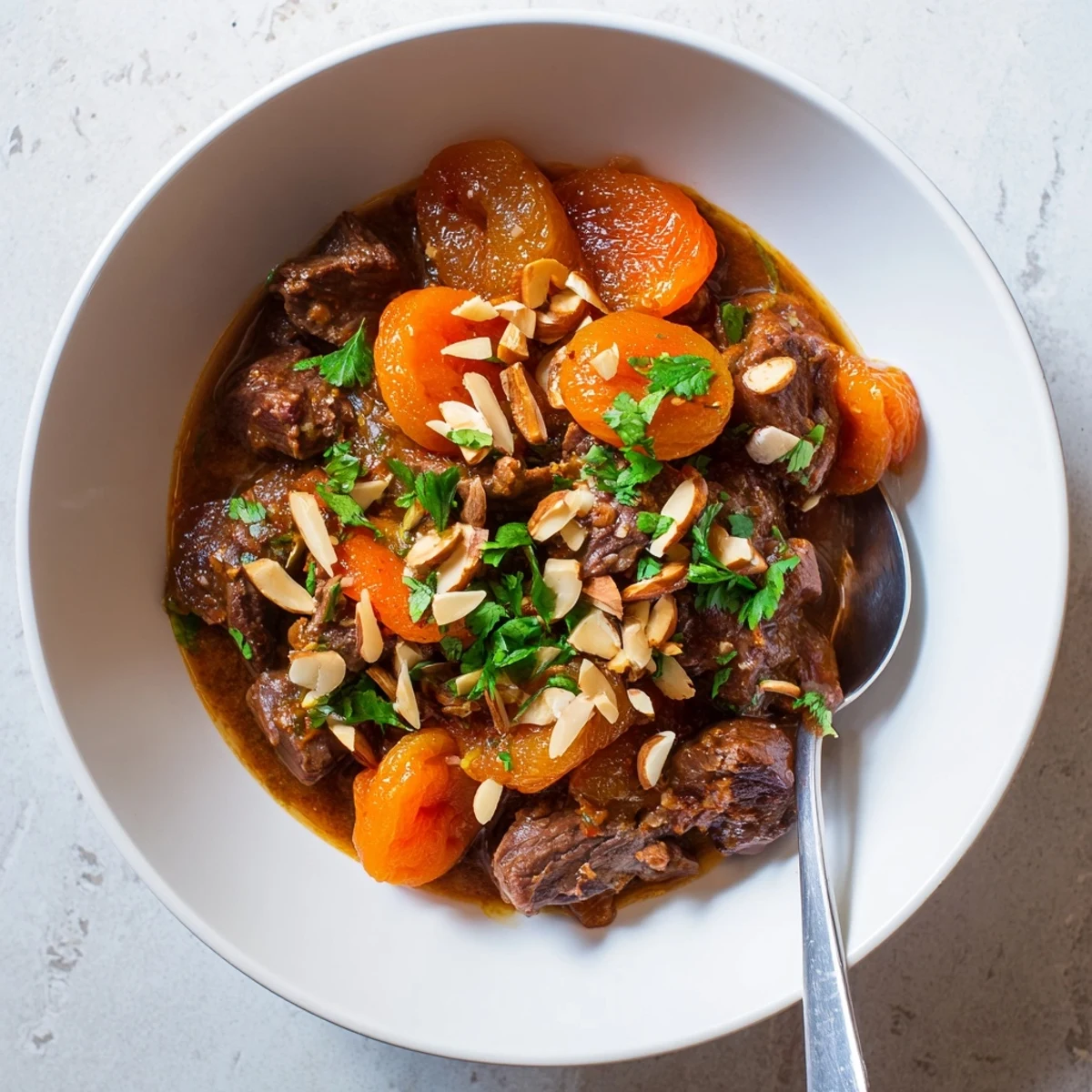
 Theres something deeply satisfying about a dish that looks impressive but is mostly hands off cooking time. This Moroccan beef stew has become my go to for Sunday dinners and cold weather comfort.
Questions & Answers About the Recipe
- → Can I use lamb instead of beef?
-
Lamb shoulder works beautifully as an alternative to beef chuck. The cooking time remains the same, and lamb adds a slightly richer flavor that complements the Moroccan spices perfectly.
- → What can I serve with this stew?
-
Traditional couscous is the classic accompaniment, but crusty bread, steamed rice, or flatbread all work well to soak up the thick, spiced sauce.
- → How do I store leftovers?
-
Cool completely and refrigerate in an airtight container for up to 4 days. The flavors deepen overnight. Freeze for up to 3 months and reheat gently on the stovetop.
- → Can I make this in a slow cooker?
-
Brown the beef and sauté vegetables first, then transfer everything to a slow cooker. Cook on low for 7-8 hours or high for 4-5 hours, adding apricots during the final hour.
- → Is this dish very spicy?
-
The cayenne pepper is optional and provides mild heat. Without it, the stew is warm and aromatic rather than spicy, with cinnamon and cumin creating depth without burn.
- → Can I add other vegetables?
-
Diced sweet potatoes, bell peppers, or butternut squash can be added with the carrots for extra heartiness. Adjust cooking time as needed until vegetables are tender.