
 Save to Pinterest
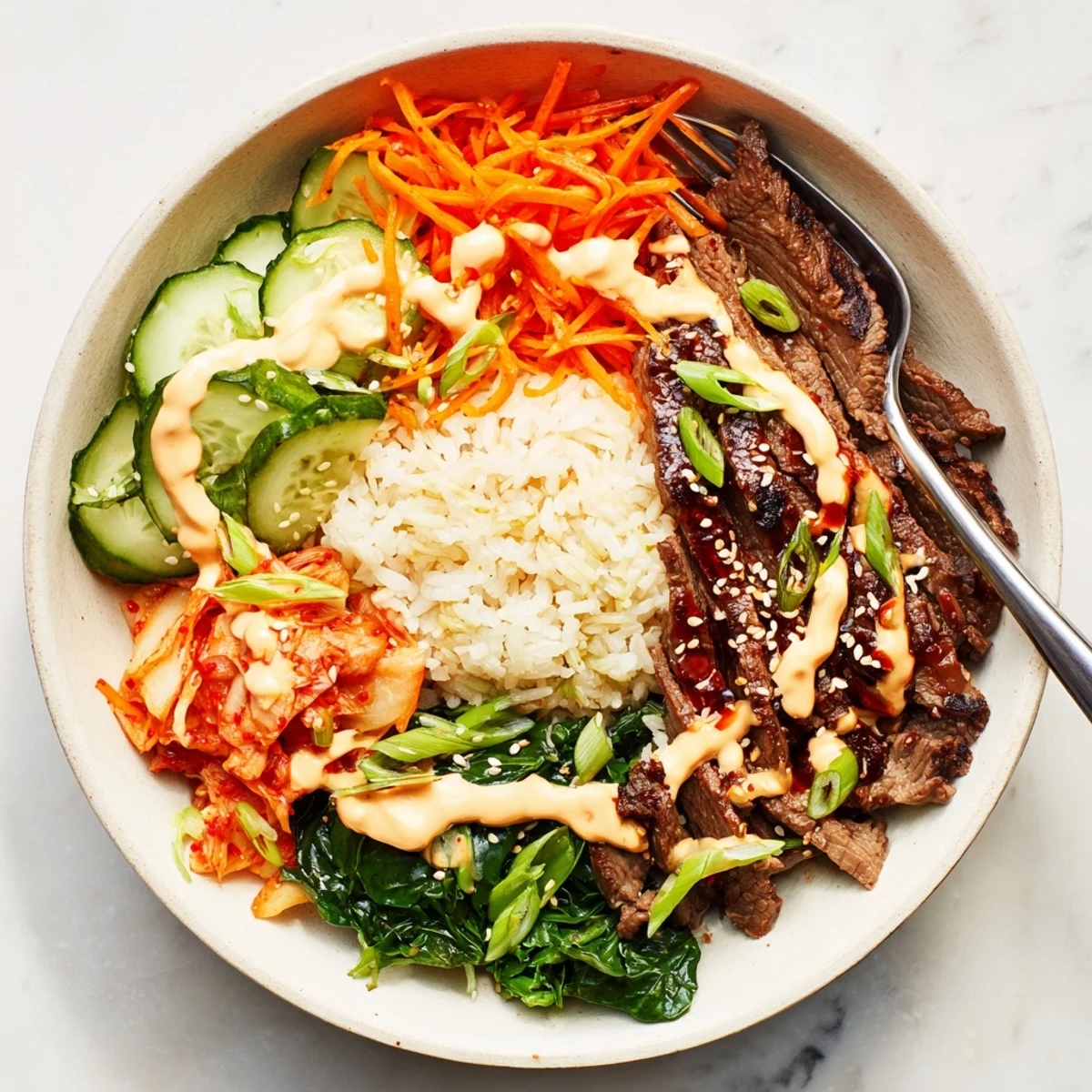
 Thinly sliced beef sirloin gets soaked in a sweet-savory gochujang marinade before being seared to caramelized perfection. Piled over warm jasmine rice alongside shredded carrots, julienned cucumber, and chopped kimchi, each bowl is finished with a tangy Sriracha cream sauce that ties everything together. Ready in under an hour, these bowls deliver layers of Korean BBQ-inspired flavor with satisfying texture contrast from crisp vegetables and tender steak.
My roommate in college used to drag me to this tiny Korean spot tucked between a laundromat and a nail salon, and their steak bowl was the only thing I ever ordered. The sauce was this ridiculous orange drizzle that I could not stop thinking about for days after. I spent an embarrassing number of weekends trying to reverse engineer it in our dreadful apartment kitchen before I finally got close enough to call it a win.
I once made a double batch of these bowls for a rooftop dinner with friends and watched two people who swore they hated kimchi go back for thirds. One of them actually texted me the next morning asking for the recipe, which felt like a genuine cooking victory.
Ingredients
- Beef sirloin or ribeye, thinly sliced: Freezing the steak for about thirty minutes makes it so much easier to slice paper thin against the grain, and that thin cut is what gives you that gorgeous caramelization in under two minutes
- Soy sauce and brown sugar: This combination creates that Korean BBQ depth where savory and sweet chase each other around your mouth instead of just sitting on top of each other
- Sesame oil and rice vinegar: The sesame oil adds a toasty richness that you cannot substitute with any other oil, and the vinegar cuts through the sweetness just enough
- Gochujang: This is the soul of the marinade and it brings a fermented chili complexity that plain Sriracha or chili powder simply cannot replicate
- Garlic and fresh ginger: Use fresh here because the jarred stuff turns muddy when it sits in the marinade and you lose that bright aromatic punch
- Jasmine or short-grain rice: Short grain gives you that slightly sticky texture that holds everything together in the bowl, while jasmine adds a floral note that pairs beautifully with the bold flavors
- Shredded carrots and julienned cucumber: These provide a crunch that cuts through the richness of the steak and sauce, and taking the extra minute to julienne instead of rough chop makes a real difference
- Kimchi, chopped: Use whatever kimchi you already love because its funk and acidity tie the whole bowl together
- Mayonnaise, Sriracha, lime juice, and honey: The spicy cream sauce is basically four ingredients whisked together but the lime juice is what lifts it from heavy to addictive
Instructions
- Marinate the steak:
- Whisk together the soy sauce, brown sugar, sesame oil, rice vinegar, minced garlic, grated ginger, black pepper, sliced green onions, and gochujang until the sugar dissolves. Toss in the sliced steak and let it sit for at least twenty minutes, though longer just builds more depth.
- Cook the rice:
- Rinse the rice under cold water until it runs clear, then combine it with water and a pinch of salt in a pot. Bring to a boil, drop the heat to low, cover tightly, and simmer for twelve to fifteen minutes before letting it rest off the heat for five minutes.
- Whisk together the spicy cream sauce:
- Combine the mayonnaise, Sriracha or gochujang, lime juice, and honey in a small bowl and whisk until completely smooth. Pop it in the fridge so the flavors meld while you handle everything else.
- Sear the steak:
- Get a skillet ripping hot over medium high heat and cook the steak in small batches, about one to two minutes per side. Crowding the pan is the fastest way to steam the meat instead of searing it, so resist the urge to pile it all in at once.
- Assemble the bowls:
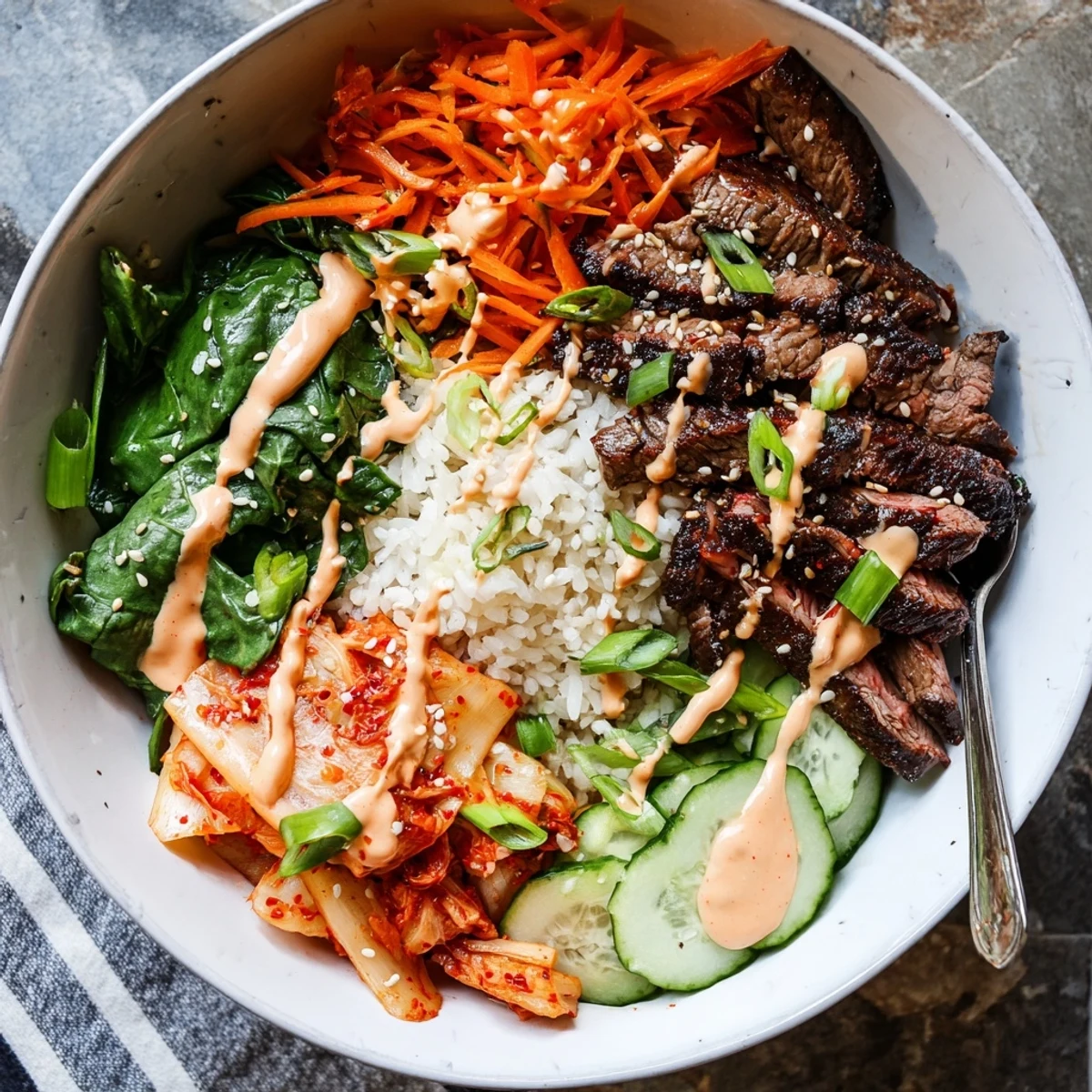
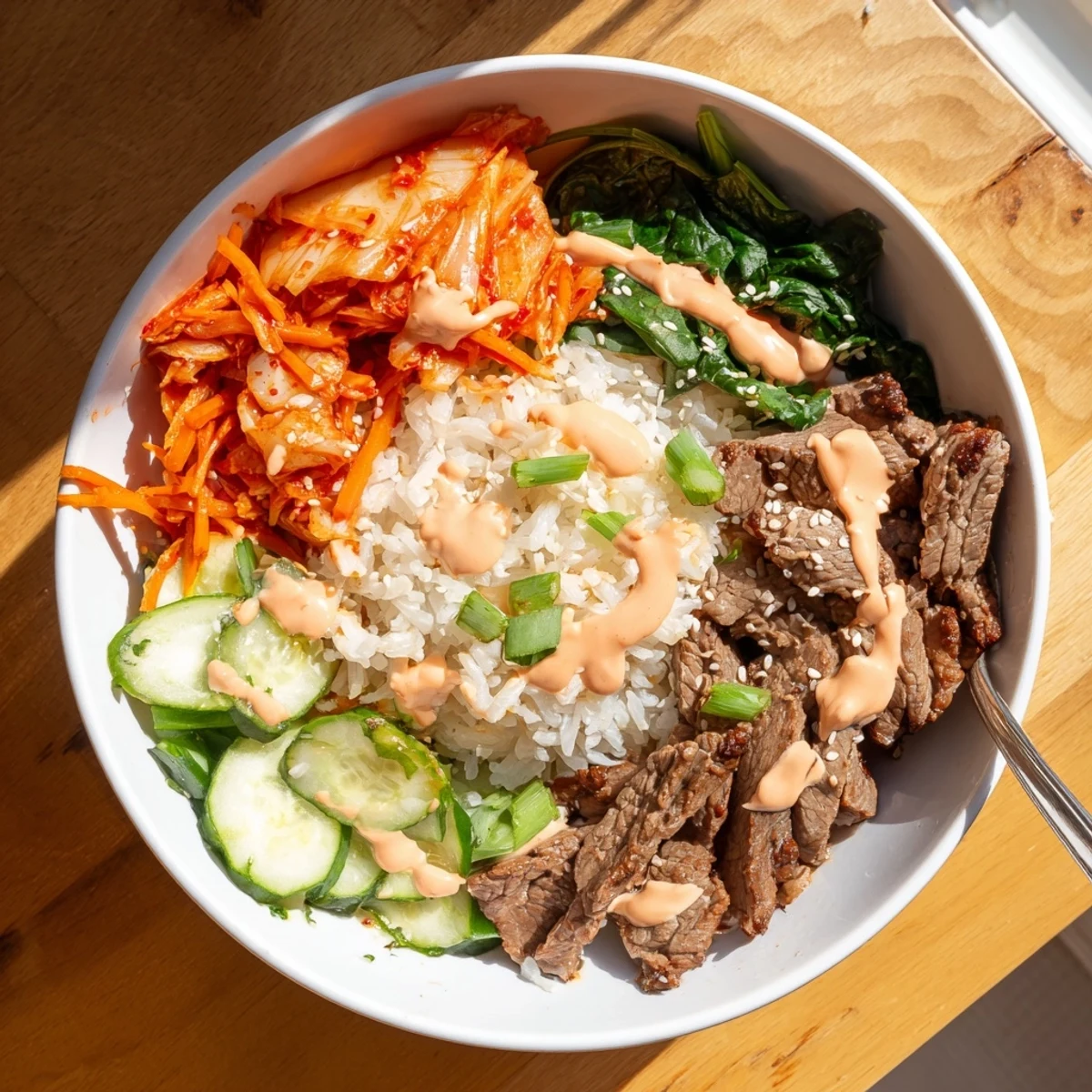
- Scoop warm rice into each bowl and arrange the steak, shredded carrots, cucumber, chopped kimchi, and greens on top. Drizzle generously with the spicy cream sauce and finish with toasted sesame seeds and sliced green onion.
 Save to Pinterest
 There was a rainy Tuesday not long ago when I made this just for myself and ate it standing at the counter, and it somehow tasted better than any of the times I had plated it nicely for company. Sometimes the best bowls are the ones nobody sees you make.
Getting the Rice Right
I used to rush the rice and end up with either mushy clumps or crunchy centers until a friend who grew up eating rice every single day told me the secret is in the rest. Those five minutes off the heat with the lid still on are what finish the cooking evenly and give you perfect fluffy grains every time.
Building Bowl Balance
The best rice bowls are not just ingredients piled in a circle. Think about having something creamy, something crunchy, something pickled, and something fresh in every bite. The spicy cream sauce handles creamy, the carrots and cucumber bring crunch, kimchi covers pickled, and the greens give you that fresh lift.
Make It Yours
Once you have the base down this recipe becomes a template you can tweak endlessly depending on what is in your crisper drawer or what protein you are feeling. A fried egg on top turns it into a completely different meal.
- Swap in chicken thighs or pressed tofu if beef is not your thing
- Use tamari instead of soy sauce to make it gluten free
- Add pickled radish or quick pickled red onion for another layer of tang
 Save to Pinterest
 These bowls have become my default answer to the question of what to make when I want something that feels special but does not require me to actually try that hard. Good food does not always need to be complicated.
Questions & Answers About the Recipe
- → What cut of beef works best for these bowls?
-
Sirloin or ribeye sliced thin works beautifully—both stay tender after a quick sear and absorb the marinade well.
- → Can I make the spicy cream sauce less intense?
-
Reduce the Sriracha or gochujang by half and add an extra teaspoon of honey to balance the heat with sweetness.
- → How long should the steak marinate?
-
At least 20 minutes for good flavor, though letting it sit up to 2 hours in the fridge deepens the Korean BBQ taste significantly.
- → Is there a gluten-free option?
-
Swap soy sauce for tamari and verify your gochujang brand is gluten-free—everything else naturally fits a gluten-free diet.
- → What proteins can replace the beef?
-
Chicken thighs or firm tofu both work well with the same marinade—just adjust cooking time accordingly.
- → Can I prepare components ahead of time?
-
The marinade, spicy cream sauce, and vegetable toppings can all be prepped a day in advance and refrigerated until assembly.