
 Save to Pinterest
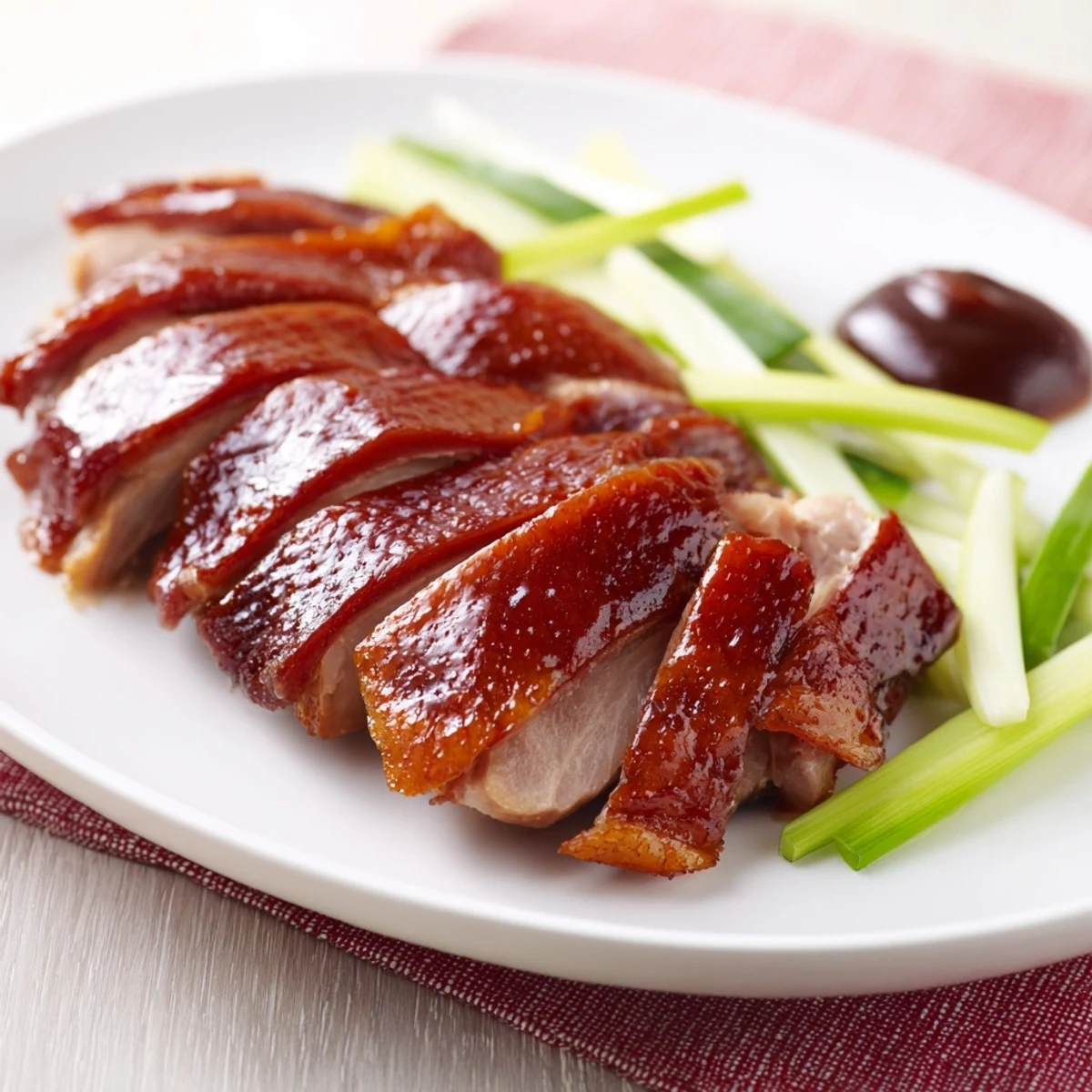
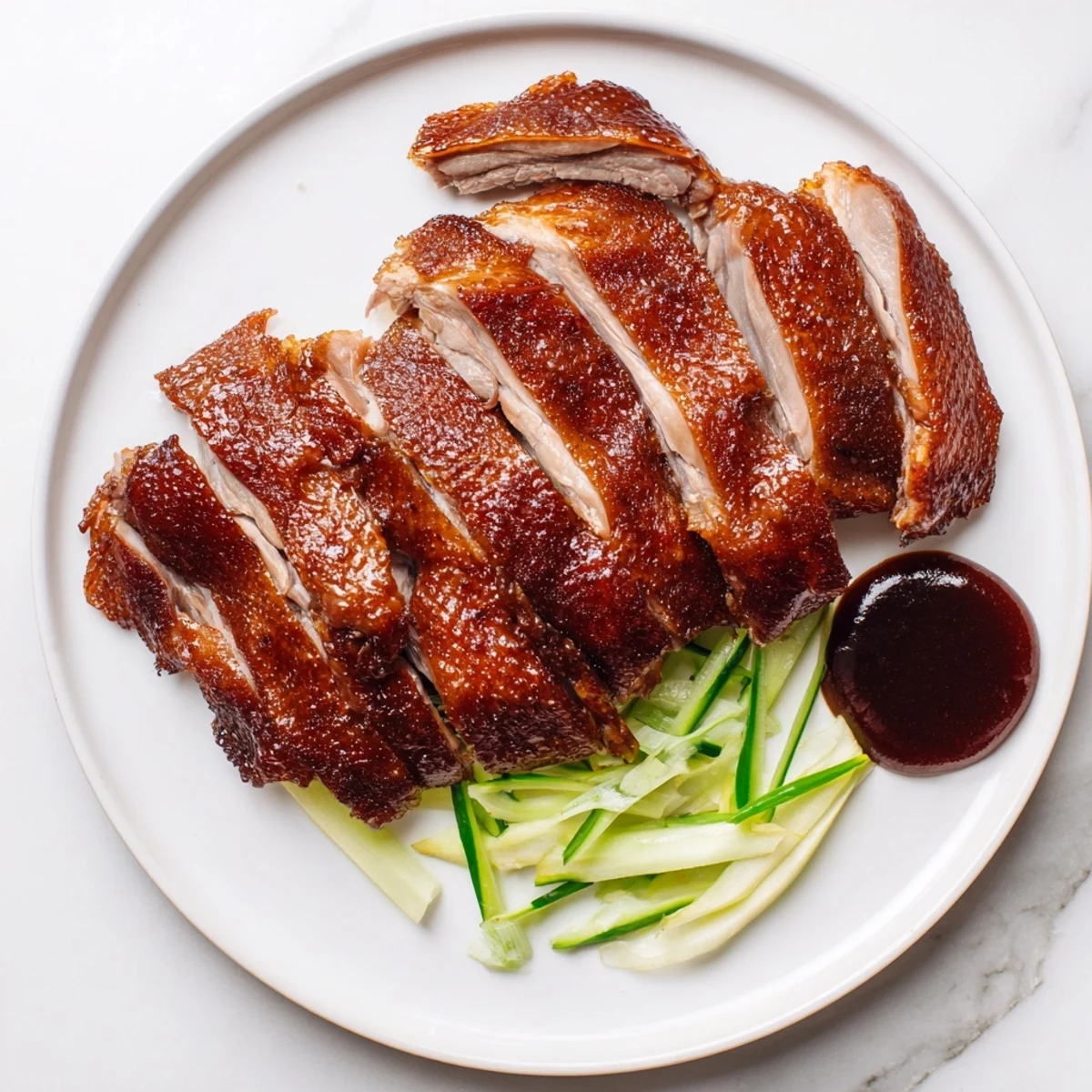
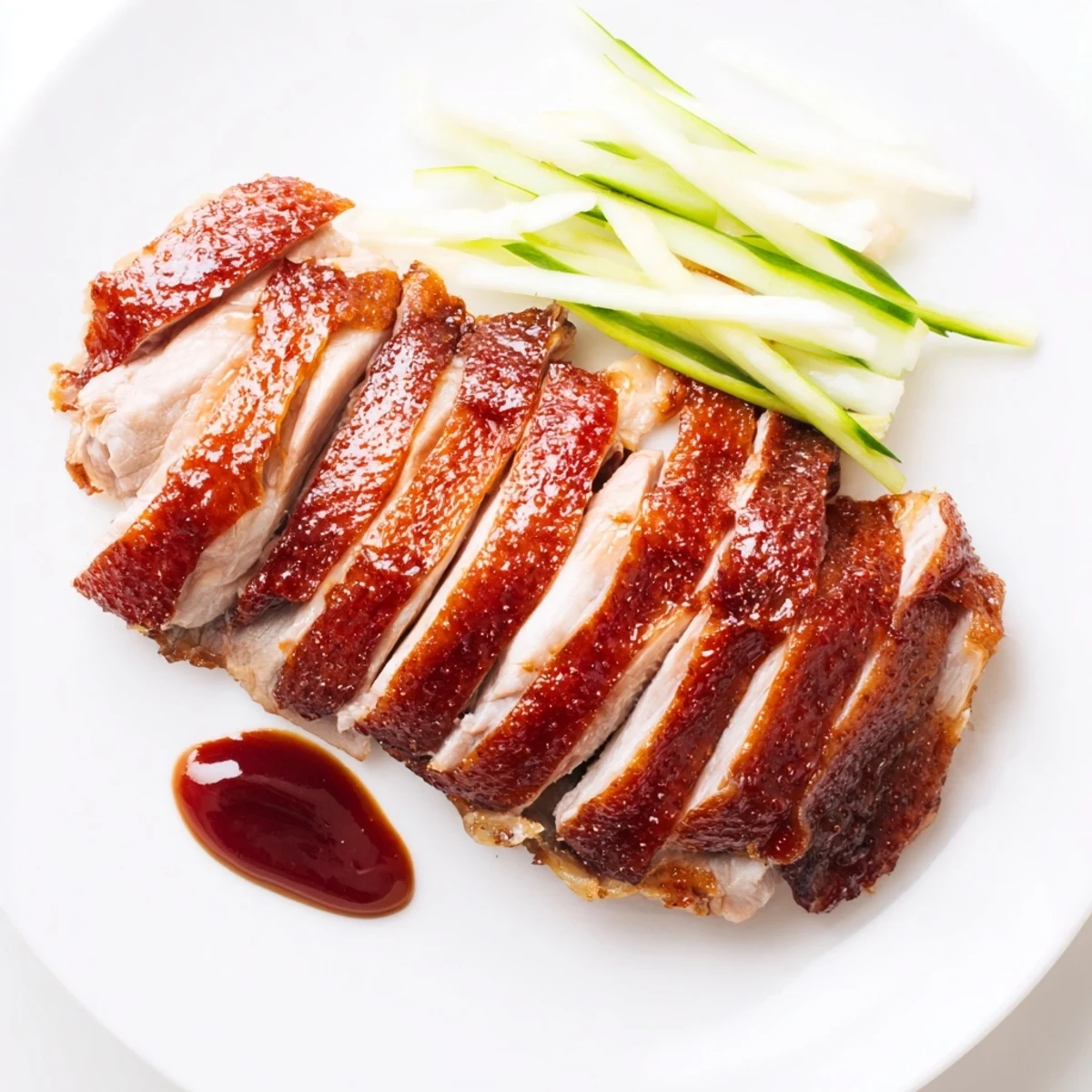
 This succulent duck features irresistibly crispy skin achieved through a two-stage roasting process. Aromatics like garlic, ginger, and scallions infuse the meat with deep flavors, while a honey-soy glaze adds a subtle sweetness. Perfectly paired with julienned cucumber, scallions, and savory hoisin or plum sauce, this dish brings a refined touch to any meal. Pricking the skin and marinating overnight enhances crispiness and taste. Ideal for gluten-free dining and special occasions.
There's something about the smell of duck roasting that fills a kitchen with anticipation—a scent so rich and golden that guests start gathering in the doorway before you've even finished carving. I discovered this recipe during a particularly cold winter when I wanted to create something that felt both indulgent and deeply comforting, the kind of dish that transforms an ordinary dinner into an occasion worth remembering.
I made this for my sister's birthday dinner, and I'll never forget watching her take that first bite—the way her eyes closed and she just sat there for a moment, fork suspended in air. She later told me that crispy skin was the texture she'd been chasing for years at restaurants, and now I'd ruined takeout for her forever.
Ingredients
- 1 whole duck (about 2 kg), cleaned and patted dry: The drying step is non-negotiable—moisture is the enemy of crispy skin, so don't skip it even if it seems obvious.
- 1 tablespoon Chinese five-spice powder: This blend of star anise, cloves, cinnamon, Sichuan pepper, and fennel does the heavy lifting for flavor, so use quality spice if you have it.
- 2 teaspoons sea salt and 1 teaspoon ground black pepper: These season the duck deeply and help draw out moisture for crispier skin.
- 3 cloves garlic, crushed, 1 thumb-sized piece fresh ginger, sliced, and 3 scallions, cut into large pieces: These stuff the cavity and perfume the meat from the inside—crushing the garlic releases its oils into the steam.
- 2 tablespoons soy sauce, 1 tablespoon honey, and 1 tablespoon rice vinegar: This mixture becomes a glaze that caramelizes on the skin in the final high-heat minutes, creating that coveted deep golden color.
- Mandarin pancakes, cucumber, scallions, and hoisin sauce for serving: The cool, fresh garnishes and sauce are essential for cutting through the richness of the duck.
Instructions
- Start low and slow with a cool oven:
- Preheat to 160°C and remove any large pockets of excess fat from inside the duck cavity. Pat the duck completely dry with paper towels—this is your foundation for crispness.
- Season generously inside and out:
- Mix your five-spice powder, salt, and pepper, then rub it all over the duck's exterior and inside the cavity where the seasoning will infuse the meat. Stuff the cavity with your crushed garlic, sliced ginger, and scallion pieces to create an aromatic steam chamber.
- Roast at a gentle temperature for one hour:
- Place the duck breast-side up on a wire rack in your roasting pan—this elevates it so air circulates underneath and the skin doesn't steam. The low heat allows the fat to slowly render without the exterior browning too quickly.
- Prepare your finishing glaze:
- While the duck roasts, whisk together soy sauce, honey, and rice vinegar in a small bowl. The honey is what creates that glossy, caramelized finish.
- Increase heat and brush with glaze:
- After the first hour, crank the oven to 220°C and brush the duck with your honey-soy mixture. Return it to roast for 20 to 30 minutes, basting once more halfway through until the skin is deep golden and crackling when you touch it.
- Rest before carving:
- Remove the duck and let it rest for 10 minutes—this allows the juices to redistribute so every slice stays moist. A sharp carving knife makes this step feel less like work and more like triumph.
- Serve with all the trimmings:
- Slice the duck and serve with warm pancakes, julienned cucumber, fresh scallions, and your choice of hoisin or plum sauce for dipping.
 Save to Pinterest
 There was a moment during that birthday dinner when the conversation around the table just stopped—everyone was too focused on eating, on savoring, on appreciating the effort that quiet patience had produced. That's when I realized this dish had become more than dinner; it had become the kind of memory people bring up a year later.
The Art of Rendering Fat
The magic of this recipe lives in fat, and understanding that changed everything about how I roast duck. When you start low, the heat gently coaxes fat out of the skin and into the pan below, leaving behind those precious pockets of air that eventually become crisp. If you race with high heat from the start, the skin will brown before it renders, and you'll end up with golden skin that's still chewy underneath—a disappointing end to good intentions.
Making It Your Own
The five-spice and soy base is traditional, but I've experimented with variations that surprised me. A touch of orange zest in the glaze brightens the richness, star anise can replace some five-spice if you love that licorice note, and marinating the duck overnight with the spice rub takes the flavor even deeper into the meat.
Timing and Temperature Matter
Duck feels more forgiving than chicken once you commit to the process, but precision with temperature and time is what separates restaurant-quality from good-enough. Use an oven thermometer if yours tends to run hot or cold, and set a timer for both the low-heat phase and the high-heat finish.
- If your oven runs cool, add 5 to 10 minutes to the initial roasting time and watch for when the skin begins to turn golden.
- The final glaze works best applied to skin that's already partially rendered and starting to brown, so resist the urge to brush it on too early.
- Rest the duck on a warm plate rather than a cutting board to keep everything hot right up until serving.
 Save to Pinterest
 This dish is worth the time it asks of you, and once you've made it once, you'll want to make it again. It's the kind of recipe that becomes part of your repertoire, pulled out when you want to impress yourself as much as your guests.
Questions & Answers About the Recipe
- → How do you achieve crispy skin on the duck?
-
Prick the duck skin all over before roasting to render fat, then roast at a lower temperature before finishing at high heat with a honey-soy glaze for a crispy, golden finish.
- → What spices enhance the duck’s flavor?
-
Chinese five-spice powder combined with sea salt and black pepper, along with garlic, ginger, and scallions, create a rich and aromatic profile.
- → Can this dish be made gluten-free?
-
Yes, by using gluten-free soy sauce and hoisin or plum sauce, the dish remains suitable for gluten-free diets.
- → What are good serving suggestions for this duck?
-
Serve sliced duck with Mandarin pancakes or steamed buns, alongside julienned cucumber, scallions, and hoisin or plum sauce for a balanced taste.
- → How long should the duck rest before carving?
-
Let the duck rest for 10 minutes after roasting to allow juices to redistribute, ensuring tender and juicy slices.