
 Save to Pinterest
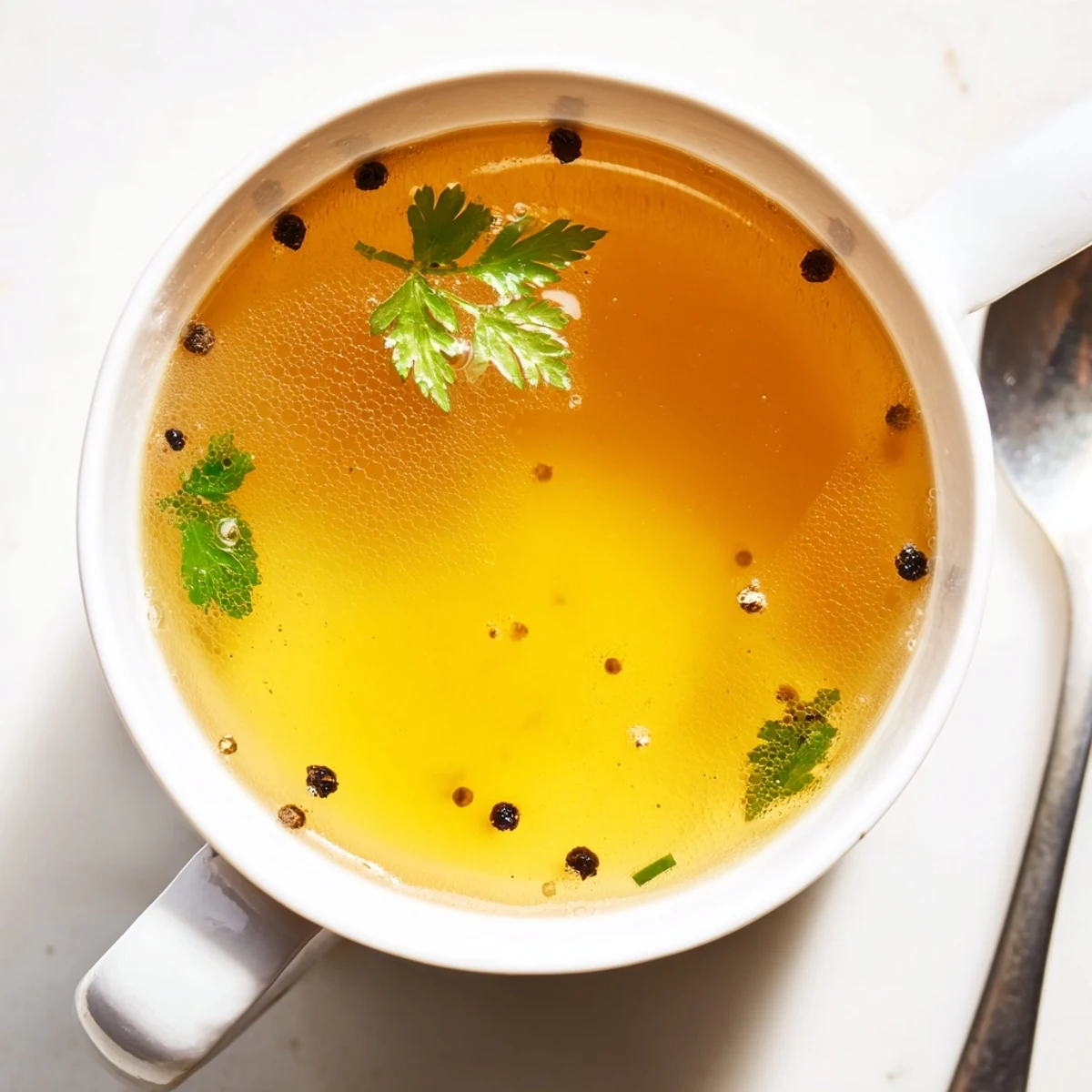
 This savory clear beef broth is made by simmering beef bones with aromatic vegetables and herbs, resulting in a light yet flavorful cup. Easy to prepare, it warms and comforts, suitable as a starter or a nourishing warm drink. Optional steps like roasting bones deepen its richness, while additions like lemon or sherry brighten the taste. Skimming ensures clarity, and the broth is best served hot in small portions.
I still remember the first time my grandmother taught me to make beef broth from scratch. It was a quiet Sunday morning, and she pulled out her worn pot, saying that real broth couldn't be rushed or faked. As the bones simmered on the stove, the kitchen filled with this warm, meaty aroma that made everything feel slower and more intentional. Now, whenever I make a cup of beef broth, I'm transported back to that kitchen, learning that the simplest things done with care are often the most nourishing.
Last winter, I made this broth for a friend recovering from a cold, and she told me later that sipping it felt like a hug in a mug. That moment made me realize that food made with intention and patience isn't just sustenance—it's a way of saying, I care about you.
Ingredients
- Beef bones (500 g, marrow or knuckle bones): These are the foundation of everything. Marrow bones give you that silky, rich mouthfeel, while knuckle bones add gelatin that makes the broth coat your palate beautifully. Don't skip them, and ask your butcher for bones with some meat still clinging—it makes a difference.
- Lean beef (100 g, optional but recommended): A handful of lean beef deepens the flavor profile and adds body to the broth. If you skip it, you'll still have something delicious, but this little bit elevates it to something special.
- Carrot (1 medium, peeled and chopped): Carrots bring sweetness and earthiness that balances the savory bones. Chopping them roughly helps them release their essence into the broth.
- Onion (1 medium, peeled and quartered): The papery layers add depth and a subtle sweetness. Don't peel away every layer—a little bit of the skin actually adds color and flavor.
- Celery stalk (1, chopped): This is your secret weapon for savory complexity. It's delicate but essential, like the bass line in music you don't consciously hear but would miss if it was gone.
- Bay leaf (1): One bay leaf is all you need. More than that, and it becomes bossy and overpowering.
- Black peppercorns (6): Whole peppercorns stay subtle and let the beef shine. If you grind them, the flavor becomes aggressive and grainy.
- Garlic cloves (2, smashed): Smashed garlic releases its oils without overpowering. The key is smashing them with the side of your knife so they open up but don't turn bitter.
- Fresh parsley sprig (1): This brightens the broth without tasting herbal or aggressive. It's like a gentle reminder that good things can be simple.
- Fresh thyme (1 sprig, optional): Thyme adds an almost minty earthiness. It's optional, but if you have it, it's worth adding—it's never the star, just the supporting actor that makes the star shine brighter.
- Salt (1 tsp, or to taste): Start with this amount and adjust at the end. Salt is your magnifier of flavor, so taste as you go.
- Cold water (1.2 liters): Cold water matters because it helps you extract everything slowly and gently. If you start with hot water, you trap the flavors inside the bones.
Instructions
- Start with cold water and bones:
- Place your beef bones and optional lean beef into a large pot and cover them completely with cold water. This is non-negotiable. Cold water lets the bones release their essence gradually, like opening a book page by page instead of skimming it. Bring everything to a boil over medium-high heat. You'll see it transition from still to gentle bubbles to a rolling boil—this takes about 8-10 minutes, and you want to watch it happen.
- Skim the foam and impurities:
- As the water reaches a boil, a gray foam will rise to the surface. This is where all the impurities hide, and skimming it is what separates a clear, elegant broth from a cloudy one. Use a ladle or a fine-mesh skimmer and just gently sweep it across the surface. Don't be aggressive. It's meditative, really. Keep doing this until the foam slows to just a few wisps—usually two or three passes.
- Build your flavor base:
- Now add your carrot, onion, celery, garlic, bay leaf, peppercorns, parsley, thyme (if using), and salt. The vegetables should nestle in around the bones. You want them to have room to give everything they have to the water. Stir gently and let everything settle.
- Simmer low and slow:
- Reduce the heat to low—and I mean genuinely low, where you see only occasional bubbles breaking the surface. This is the whole point. A gentle simmer, uncovered, for 40-45 minutes. You're not cooking anything; you're coaxing flavors out of bones and vegetables like a patient conversation. The uncovered pot lets steam escape, which means your broth stays clear and brilliant. If you cover it, the condensation will cloud everything.
- Occasional surface cleaning:
- Every 10 minutes or so, if you notice any impurities rising to the surface, give it a gentle skim. This keeps your broth clear and refined-looking in the cup.
- Strain with patience and care:
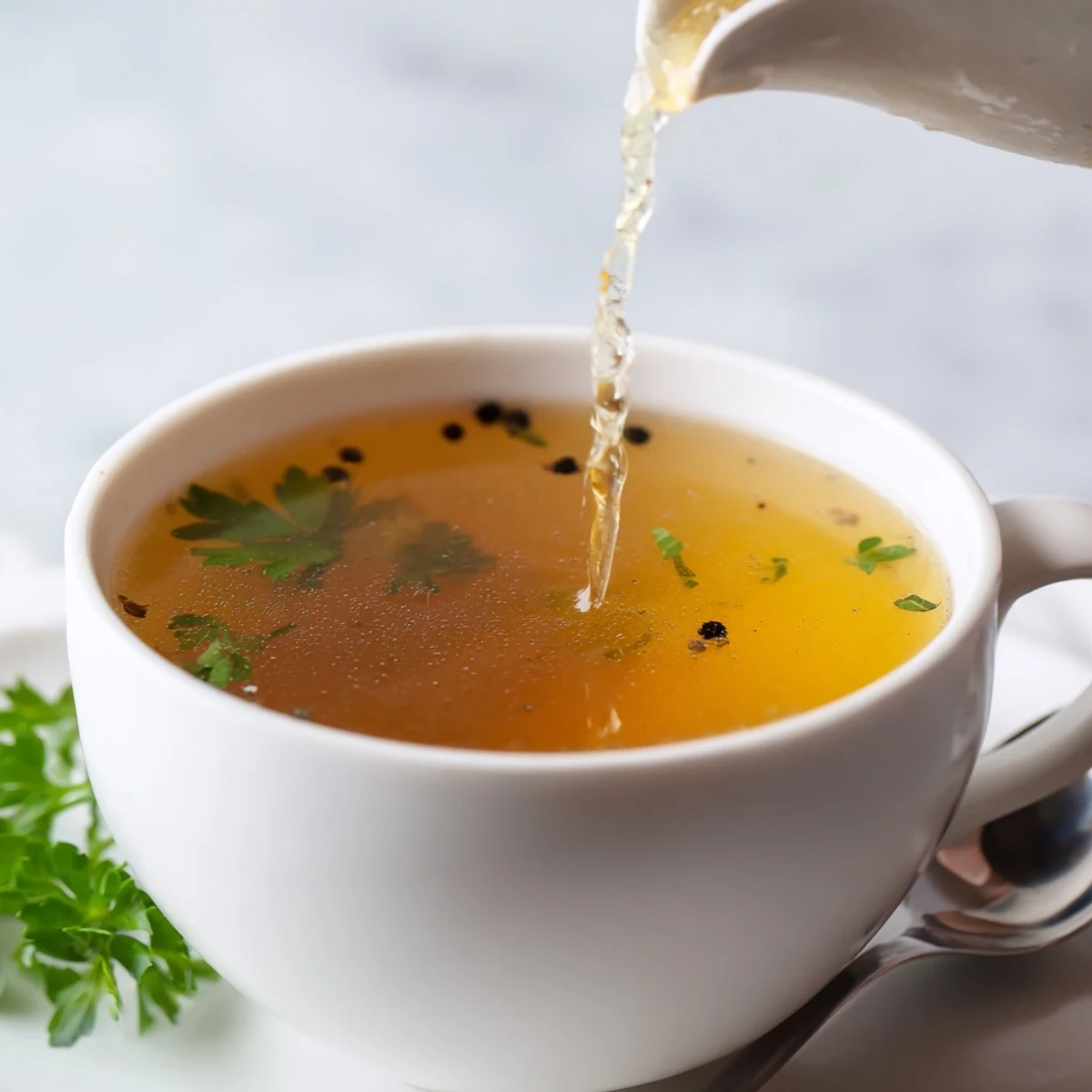
- When the time is up, you'll notice the broth has taken on a warm amber color and smells incredible. Set a fine-mesh sieve or cheesecloth over a clean pot or bowl and carefully pour the broth through, letting gravity do the work. Don't rush it. Don't press the vegetables—just let the broth flow through naturally. You'll have clear, beautiful liquid. Discard all the solids.
- Taste and finish:
- The broth should taste savory and deep. Taste it and adjust the salt as needed. It should taste like comfort but also like you put thought into it. Serve it hot in cups, maybe with a piece of crusty bread if you're feeling generous.
 Save to Pinterest
 I gave this broth to a colleague who had just moved to the city and was feeling homesick and lost. She called me the next day and said she'd made it again, that it made her feel anchored. That's when I understood that a good cup of broth is never just broth—it's permission to slow down, to feel nourished, to be present with something warm in your hands.
Why This Broth Is Worth Making From Scratch
Store-bought broths are convenient, but there's something almost magical about watching bones transform into golden liquid over 45 minutes. The bones release collagen, minerals, and flavor compounds that no shortcut can replicate. When you taste homemade broth, you're tasting patience and intention—and your body knows the difference. It's not just food; it's medicine in the gentlest sense.
Making It Your Own
This is a foundation, and foundations are meant to be built on. After straining, add a squeeze of fresh lemon juice to brighten everything just before serving—it's like a sunrise appearing in a cup. A splash of good sherry adds richness and depth. Some people add a strip of kombu seaweed for umami, or a piece of ginger for warmth. The beauty of broth is that it's forgiving and wants to become whatever you need it to be.
Storing and Freezing
Make extra. Seriously, this is the gift of broth—it keeps and improves. Let it cool to room temperature, then refrigerate in containers for up to five days, or freeze in ice cube trays for portion control. Frozen broth can last three months and becomes the foundation for countless future meals. I've pulled broth from my freezer on nights when I had no energy to cook, and it transformed a simple bowl of rice into something nourishing.
- Freeze in ice cube trays first, then pop the cubes into freezer bags for easy storage and use.
- Homemade broth will gel when cold because of the collagen—this is a good sign, not a problem.
- Label your containers with the date so you remember when you made this gift to your future self.
 Save to Pinterest
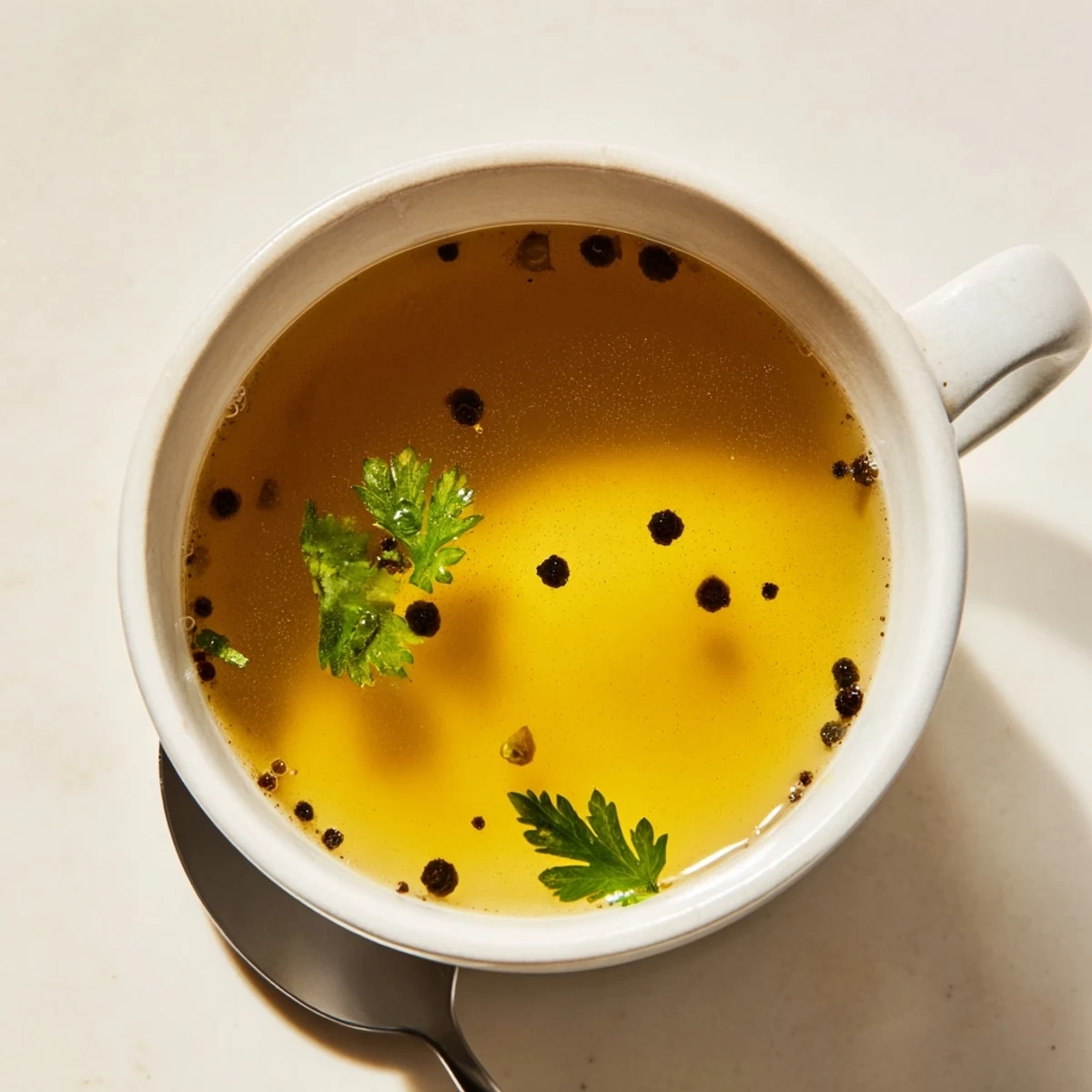
 A cup of beef broth is simple, but simplicity is where all the best things live. Make it with care, and it becomes something that nourishes more than just your body.
Questions & Answers About the Recipe
- → How do I achieve a clear broth?
-
Skim off foam and impurities regularly during simmering. Using cold water initially and gently simmering helps maintain clarity.
- → Can I add more flavor to the broth?
-
Roasting bones and vegetables before simmering and adding a splash of sherry or lemon juice brightens the flavor.
- → How long should the broth simmer?
-
Simmer uncovered for 40–45 minutes to extract flavors while keeping the broth light and clear.
- → Is it necessary to strain the broth?
-
Yes, straining through a fine-mesh sieve or cheesecloth removes solids and results in a smooth, clear cup.
- → Can the broth be stored for later use?
-
Freeze in portions once cooled to preserve flavor and freshness for future servings.