
 Save to Pinterest
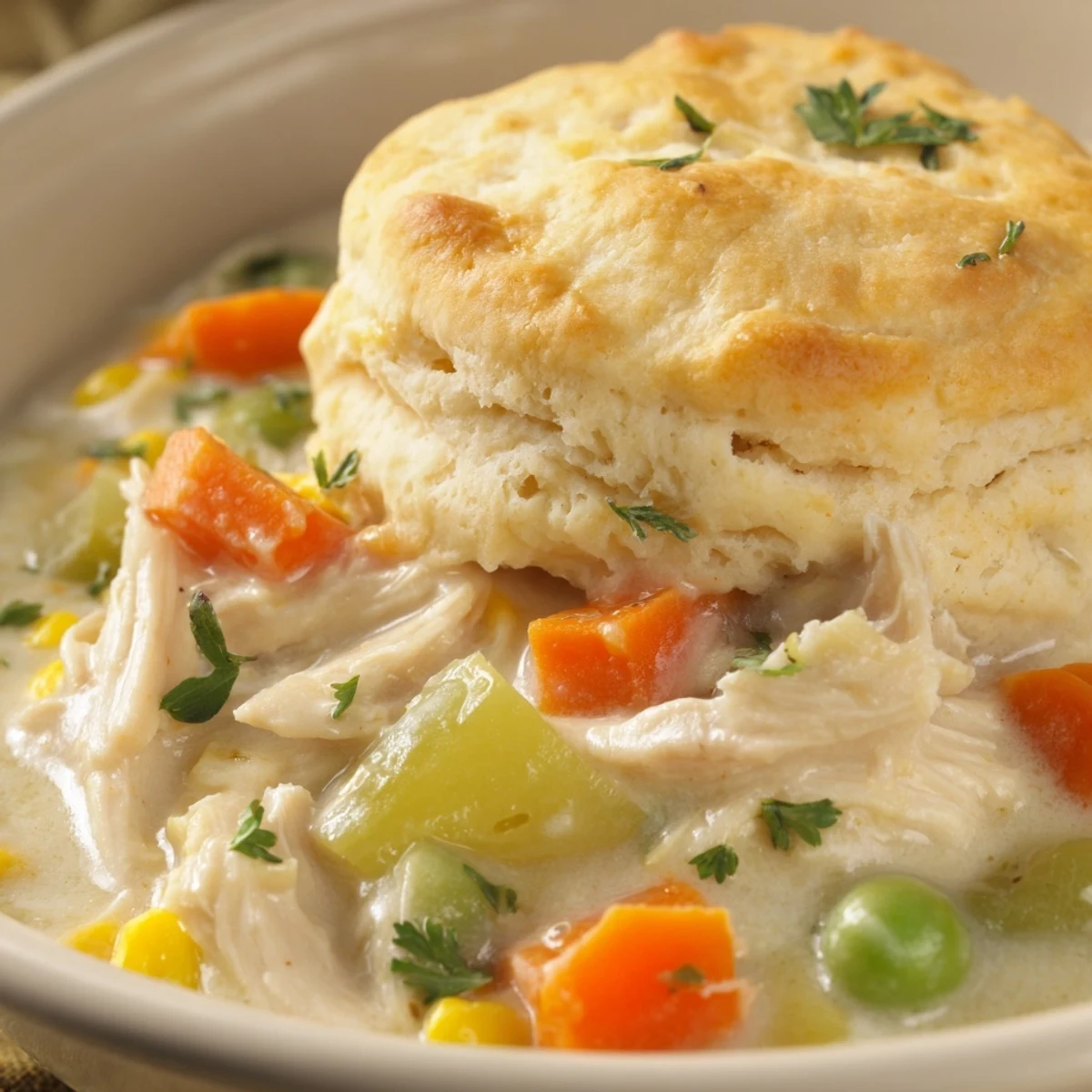
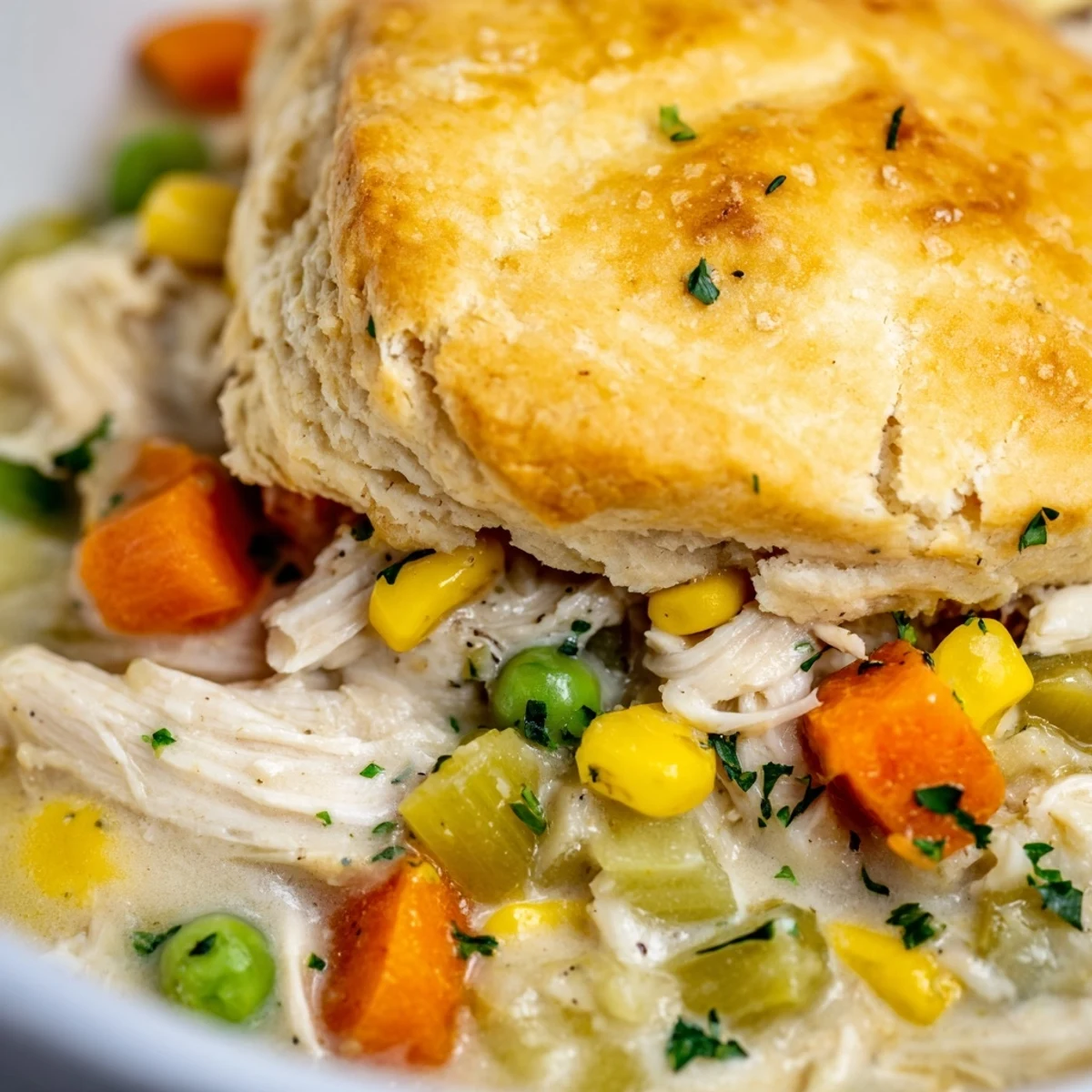
 This comforting dish combines tender chicken, fresh vegetables, and a creamy broth, all baked under a flaky biscuit topping. The cooking process starts by sautéing onions, carrots, and celery in butter and olive oil, then thickening the broth with a flour blend. Chunks of chicken, peas, and corn add hearty texture and flavor, enhanced with dried herbs like thyme and parsley. Biscuit dough is dropped over the simmering soup and baked to a golden finish, creating a warm, satisfying dish perfect for cooler days.
There's something about a bowl of creamy soup with a warm biscuit on top that makes everything feel manageable again. I stumbled into this recipe on a particularly gray afternoon when I needed comfort food but didn't have the energy for fussy cooking. The magic happened when I realized I could build an entire pot pie experience in one bowl, and the biscuits baked right on top transformed it from soup into something closer to a warm hug.
I made this for a friend who'd just moved into her first apartment, and watching her face light up when she saw those golden biscuits floating on creamy soup told me everything. She said it tasted like the kind of meal that makes a house feel like home, and honestly, I couldn't have said it better myself.
Ingredients
- Unsalted butter and olive oil: The combination of both gives you rich flavor and helps prevent the butter from browning too quickly when you're building the base.
- Yellow onion, carrots, and celery: This trio is the foundation of everything savory, and taking five minutes to let them soften properly makes a real difference in the final depth of flavor.
- Garlic: A full minute of cooking once you add it releases those sweet, mellow notes that tie the whole soup together.
- All-purpose flour: This creates your roux, which thickens the soup and gives it a velvety texture if you cook it for two minutes to lose that raw flour taste.
- Chicken broth, whole milk, and heavy cream: The balance matters here—the cream makes it luxurious, but the milk keeps it from becoming heavy.
- Cooked chicken breast: Shredded works best because it absorbs the creamy broth and disappears into the soup like it belongs there.
- Frozen peas and corn: They're already blanched, so they add brightness and texture without requiring extra prep.
- Dried thyme and parsley: These herbs give the soup its quiet, comforting flavor profile without shouting.
- Cold unsalted butter for the biscuits: This is non-negotiable—warm butter won't give you flaky layers, so keep it in the freezer until the last moment.
- Baking powder and baking soda: Together they ensure your biscuits rise properly and stay tender, not dense.
Instructions
- Preheat and prepare:
- Set your oven to 400°F so it's ready when your biscuits are waiting. This matters because cold dough on a hot soup will bake properly instead of steaming.
- Build your flavor base:
- Heat the butter and oil in your Dutch oven, then add the onion, carrots, and celery. Let them soften for five to six minutes—you're not looking for color, just tender vegetables that smell sweet.
- Toast the garlic and flour:
- Add the garlic and cook for just one minute, then scatter the flour over everything and stir for two minutes. This step cooks off the raw flour taste and creates the base that will thicken your soup.
- Create the creamy base:
- Slowly whisk in the chicken broth, watching for lumps, then add the milk and cream. Keep stirring as it comes to a simmer, and you'll feel it thicken around five to seven minutes—it should coat the back of a spoon.
- Add the soul of the soup:
- Stir in your cooked chicken, frozen peas and corn, thyme, parsley, salt, and pepper. Let it simmer for five minutes so everything gets to know each other.
- Make the biscuit dough:
- While the soup is simmering, whisk together the flour, baking powder, baking soda, and salt in a bowl. Cut the cold butter into small cubes and work it in with a pastry blender or fork until the mixture looks like coarse breadcrumbs—tiny butter pieces are what create the flakiness.
- Bring the dough together:
- Pour in the cold milk and stir just until the dough comes together—overmixing is the enemy of tender biscuits. Stop when you see no more dry flour.
- Top the soup:
- Remove the soup from heat and drop spoonfuls of dough (about two tablespoons each) across the surface, spacing them so they have room to rise.
- Bake until golden:
- Transfer the pot to the oven and bake for eighteen to twenty-two minutes until the biscuits are deep golden brown on top. You'll know they're done when they feel firm and sound hollow if you tap them.
- Finish and serve:
- Let it cool for a few minutes—this matters because the soup will be molten underneath those biscuits. Sprinkle with fresh parsley if you have it, then serve while everything is still steaming.
 Save to Pinterest
 There was a moment last winter when I served this to my family on a night when we'd all been scattered and stressed, and something about passing around bowls of steaming soup with biscuits floating on top brought everyone back to the same table, in the same moment. That's when this recipe stopped being just dinner and became something that mattered.
Why This Becomes a Favorite
The beauty of this soup is how it adapts to what you have on hand. I've made it with rotisserie chicken on nights when cooking seemed like too much, and it was just as good. I've added diced potatoes when I wanted something heartier, swapped in fresh herbs when my garden was overflowing, even drizzled in a splash of white wine once and watched it brighten everything. Each version felt like the right choice at the time, and that's the mark of a recipe that actually works in real life, not just in theory.
The Science of Flaky Biscuits
The reason those biscuits turn out flaky instead of tough has everything to do with the cold butter and minimal mixing. Those small pockets of cold butter melt during baking and create steam, which creates layers—it's actually the same principle that makes puff pastry work. If you stir too much, you warm up the butter and activate the gluten, and suddenly you've got dense little hockey pucks instead of clouds. I used to make this mistake until I understood what was actually happening, then everything clicked.
Timing and Temperature
One thing that took me a few tries to nail was understanding that this soup needs to be properly simmered before the biscuits go on top. If the soup is just warm, the biscuits will bake too slowly and might overcook before the centers are done. If it's actively boiling, the turbulence can break apart the dough. The sweet spot is a gentle simmer where you see small bubbles breaking the surface—that's when it's ready. I also learned that letting it cool for just a few minutes after baking makes it easier to serve without burning yourself, and the flavors actually meld better.
- Use an ovenproof Dutch oven so you can go straight from stovetop to oven without transferring anything.
- Check that your biscuits are cooked through by tapping the top—a hollow sound means they're done inside.
- Leftover soup reheats beautifully on the stovetop or in the microwave, though the biscuits are best eaten fresh.
 Save to Pinterest
 This soup is proof that you don't need complicated techniques or rare ingredients to make something that feels special. It's the kind of meal that reminds you why you love cooking in the first place.
Questions & Answers About the Recipe
- → Can I substitute the chicken with another protein?
-
Yes, turkey or cooked shredded rotisserie chicken work well as alternatives, providing similar texture and flavor.
- → How do I achieve a flaky biscuit topping?
-
Cut cold butter into the dry ingredients until crumbly, then mix minimally with cold milk to keep the dough light and flaky once baked.
- → Can I make the soup ahead of time?
-
Prepare the soup base and biscuit dough separately, then combine and bake just before serving to maintain biscuit texture.
- → What can I add to increase the heartiness of this dish?
-
Diced potatoes or additional root vegetables like parsnips can be added for extra body and flavor.
- → Is it possible to use fresh herbs instead of dried?
-
Fresh thyme and parsley can be used, but add them later in the cooking process to preserve their bright flavors.